Where Do I Fall on the Learning Spectrum?
Image created by Samara Marin using Copilot 2024
Isn’t it interesting to think about how certain points in life simply align? The week that I research and write my learning philosophy, I have a professional development in which I am asked to reflect on my educational experience as a student. Looking back at my experience as a learner both in school and outside of school, I realized that experiences have shaped who I am as a learner and educator.

Who I am as a learner has influenced the educator in me. I have always learned from the environment around me, as I tend to focus on everything and nothing simultaneously. As a bit of background, the professional development was over college and career readiness, and we discussed how students become aware of careers that are available to them. In order to drive the point home, Ms. Del Pilar (the guest speaker) had us reflect on our education. This made me realize that I always wanted to be a teacher; however, it also made me realize that growing up, I would often be reprimanded due to the way I learn. I have always drawn while listening to lectures; unfortunately, teachers think I am not listening. I do this to focus on the words spoken, as I prefer to hear information in the form of conversations, whether I am a part of the conversation or not. Having trouble understanding a topic the first time is why I prefer discussions, discussion posts, or asking questions. There is more about my journey in transforming my experiences as a student into a career as an educator below in my Blog post learning manifesto.

Learning Manifesto
The content discusses the author’s journey to becoming a teacher and the role of technology in education. The author emphasizes the importance of sparking students’ interest in learning and adapting…


Can Constructivism and Connectivism Work Together?
Image created by Samara Marin using Copilot 2024
Before I define myself as an educator and a learner, I should define all four. Doing so, I can explain why I identify with the two philosophies I identify with.

Cognitive Learning Theory- Focuses on inner mental actions such as thinking, knowing, memorizing, and problem solving and how they are used to create knowledge. This theories weakness is it requires learners to train to complete tasks in a similar way for consistencies sake (Masethe, Masethe, Solomon Odunaike, 2017).
Behavioral Learning Theory- is based on giving students feedback in order to avoid incorrect responses or behaviors (Masethe, Masethe, Solomon Odunaike, 2017).


Constructivist Learning Theory- is a learner centered-view of teaching that is has cognitive roots. This theory believes that students do not passively receive knowledge, rather they must “construct” their knowledge actively through their own goals, activities, and by seeking feedback from the teacher (Masethe, Masethe, Solomon Odunaike, 2017).
Connectivist Learning Theory- is the newest of the learning theories and is centered on the idea that students are nodes in a network of information that is always connected. The Idea of connectivism is knowing where to find information when it is needed (Masethe, Masethe, Solomon Odunaike, 2017).

“The principal goal of education is to create men who are capable of doing new things, not simply of repeating what other generations have done-men who are creative, inventive, and discovers. The second goal of education is to form minds which can be critical, can verify, and not accept everything they are offered.”
-Jean Piaget
From the beginning, I knew I was a constructivist, as every student stepped into my classroom with a different set of knowledge and skills. “Piaget’s interest in the nature of knowledge and epistemology led him to theorize that children not only construct their own knowledge, but the types of knowledge they are constructing are not equal, and different knowledge demands different means of construction” (Cohen, Waite-Stupiansky, P. 5, 2023). Piaget’s theory means that, on average, I have 150 different stories entering my classroom every year, 150 different ways that a learner will interpret my lesson, and 150 different ways that my lesson can be discussed amongst students.
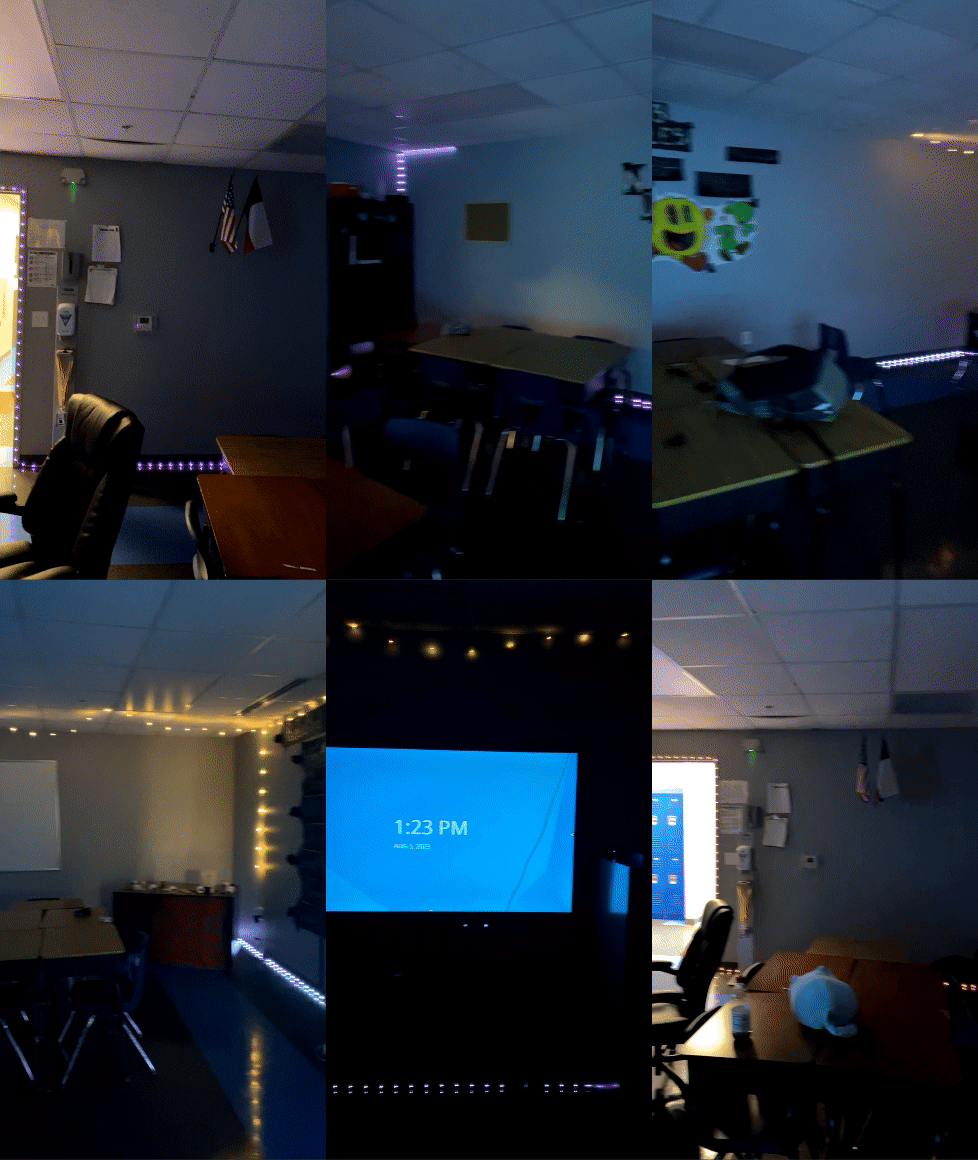
Based on constructivist theory, since students are actively interacting with their environment, interacting with their environment often means interacting with each other. My classroom is set up in groups because students are more likely to ask each other for help than the teacher, especially at the beginning of the year. Allowing students to help each other is also important because these same students have 150 different interests: while one student may excel at English, the other may excel at U.S. History, which, with the cross-curricular aspects of the high school classrooms, is welcome. In a classroom of 20-26 students, why should I deny the students the help of their peers when Piaget believes “Teachers who welcome this range and plan for it in the daily curriculum will expand the teaching staff many times over as the other children become members of the team” (Cohen, Waite-Stupiansky, P. 14, 2023). As an education and learning philosophy, I align with constructivism because every year, my students arrive in my class with different backgrounds and leave my classroom with different takeaways. Below is a GIF of my classroom at the beginning of the year before any students arrive, once I set up my desks into groups. I have two “teacher desks” which I never use. When students want to sit away for independent time or want to work in groups of three or less they can sit at either of the teacher desks. As a teacher, I am also learning from them, whether that is new information I did not know (for example, from my students who love U.S. History) or a new teaching technique.
Collaboration is the cornerstone of another learning theory: connectivism. “Connectivism is an innovative learning theory, which proposes that, in order to learn effectively, students should embrace the integration of thoughts, theories, and information that one experiences when using modern-day technology” (Kurt, 2023). The theory focuses on the collaboration aspect. It treats students as another “node” in the information network as they also can contribute to the information exchange process online. According to Western Governor’s University, “nodes” refer to anything that can connect to any person or object that can connect to any other person or object online (2021). As far as this learning theory goes, I only half align with it as an education theory. I align with students having access to technology, information, and connectivity outside the classroom. The connectivity in the school looks more like students connecting with games like Gimkit, Blooket, or exchanging information on a collaborative research paper project. As a learning philosophy, I 100% align with connectivism as I often find myself collaborating with online forums or peers in the gaming community in order to solve a problem. Most recently, I needed to fix a problem with my graphics card on my desktop, and I decided the fastest way to solve the problem was to see if anyone in our gaming community was online.

But Why Does Constructivism Sound Familiar?
Image created by Samara Marin using Copilot 2024
Similar to how there are learning Philosophies there are teaching philosophies. The difference is the teaching philosophy is focused on the educator and are much more specific as the teaching philosophy deals each teacher individually. According to the University of San Diego, a teaching philosophy should include:
- Your core belief(s) about the purpose of teaching and learning
- A high-level description of how you teach
- An explanation of why you teach that way
- Any primary specializations
- Examples of your teaching philosophy in practice in the classroom (if space allows)

The relationship between a teaching and a learning philosophy is a teacher’s beliefs about the learning philosophies they align with should be included in their teaching philosophy. How a teacher believes a student will learn in her class affects how she teaches. For example, a teacher can have a student-centered teaching philosophy that would align with a constructivist learning philosophy. Below are some examples of teaching philosophies that teachers have mentioned:
Play-Based Teaching Philosophy- Froebel’s approach is based on the idea that student’s learn through trial and error.
Holistic approach- Teaching who have this type of teaching philosophy follow Maslow’s humanist approach and use his hierarchy of needs.
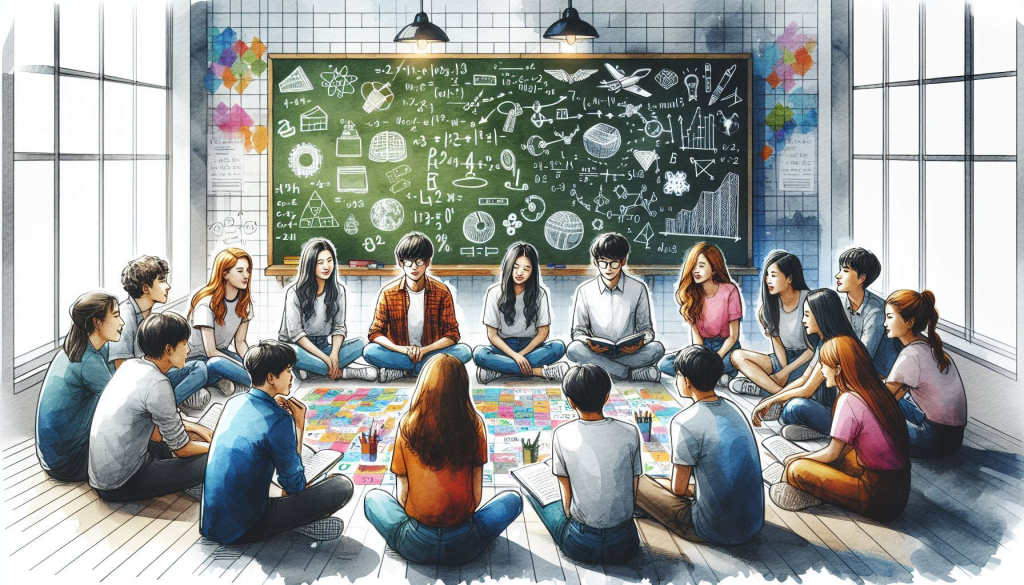

Constructivist Teaching Philosophy- while constructivism is a learning philosophy is, it is also a teaching philosophy that follows active discovery learning.
Deciding on a teaching philosophy is essential because it will shape the rest of the teachers’ pedagogical philosophies, from what their classroom looks like to what they believe about student learning. As we move further into teaching, the context of finding information, instead of passively teaching content student-based teaching philosophies has been emerging more.

Teaching VS. Learning Philosophies
Image created by Samara Marin using Copilot 2024
Is it really a teaching vs. a learning philosophy, or do they go hand in hand? In order to be able to answer this question, we first need to define what a teaching philosophy is. We’ve already defined four learning philosophies but have yet to mention a teaching philosophy. While a learning philosophy is the “how,” students will learn, the teaching philosophy is the “why” for why educators teach. The “why” behind why teachers teach usually influences “how” they teach. I teach high school to catch students who have lost their spark for learning. Through constructivism and the idea that they are all walking into my classroom with different experiences, I can help students find their spark for learning again. Through authentic learning experiences, having more time to allow students to work on projects or classroom discussions could help them find the joy of learning, which is my “why” and how it connects to the students’ “how.”

The difference between the teaching philosophy and the learning philosophy is that one focuses on the role of the teacher—what the teacher does, why she does it, and how she does it. That is the teaching philosophy. The other focuses on the role of the learner—how they learn and what they need to succeed in the learning environment. Therefore, since a great educator should be a lifelong learner, they should have both, and their learning and teaching philosophy should work together. This is where the relationship between the learning and teaching philosophies comes into play, so maybe this section would have been better named “Learning and Teaching Philosophy Synergy.”
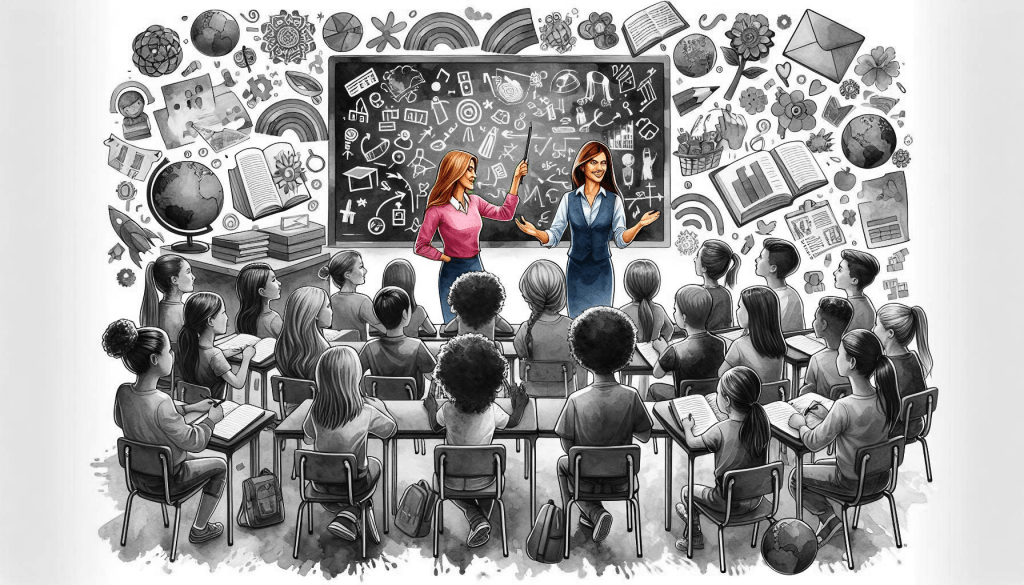
Teaching Philosophy- focuses on the teacher’s “why.” Why does the educator teach? The answer to this question will influence the rest of their pedagogy. It will influence why they believe students learn the way they do, why teachers set up the classroom the way they do, etc.
Learning Philosophy- Focuses on the student’s “how.” How does the student learn? How does the student interact with their environment? This waterfalls down onto the next level of the educational environment: the classroom.


The Bigger Picture- When the educator’s teaching philosophy and learning philosophy align, then they work together in Creating a Significant Learning Environment (CSLE) for the learner.
“Teaching means creating situations where structures can be discovered.”
-Jean Piaget
When the relationship between a teacher’s learning and teaching philosophy works well, we move forward with creating significant learning environments for our students to learn. With my learning and teaching philosophies aligning with constructivist philosophies, I wish to create an environment that the students develop by the end of the year. So, while each year my classroom will look similar, it will not look exactly the same as each year I will have a different set of students interacting and creating an environment within a set of boundaries and limitations set by myself as their facilitator of learning.

Can Connectivism and Constructivism Find the Buried Resources?
Image created by Samara Marin using Copilot 2024
“And human resources are like natural resources; their often buried deep.”
-Sir Ken Robinson, 2010
As I build my learning and teaching philosophies, connectivism and constructivism go hand in hand. Constructivism uses an environment readily visible to students so that students can build and rebuild their knowledge constantly. According to Piaget, we progress and regress, learn, unlearn, and relearn as our environment changes. Constructivism is an important theory in the digital age, in which information is updated daily. Connectivism fills in the gaps in knowledge that constructivism cannot. The information and knowledge that students cannot find in the classroom, students will discover collaborating through the internet using connectivist theory, and as teachers, we are tasked with assisting students in navigating the technology well. Most importantly, connectivism and constructivism use the most important resource in the classroom: student collaboration to promote critical thinking with teacher guidance.
The connectivist theory is incorporated into my Innovation Plan, by using the flipped classroom to deliver lessons at home, which will leave more class time for constructivist theory to come into play. Ideally, students would collaborate online with the lesson and each other in order to understand the lesson through connectivism practices. By the time class starts, what will be left are discussions for students to solidify their understanding and complete any projects based on the lesson.
It may take a few years to shift student and teacher mindsets in order to have students take charge of their learning experience; however, the benefits would greatly outweigh any cons.

References
Image created by Samara Marin using Copilot 2024
If you would like more information about my references, feel free to read my annotated bibliography.
Administrator. (2023, November 16). What is a Teaching Philosophy? Examples and Prompts. University of San Diego – Professional & Continuing Education. https://pce.sandiego.edu/teaching-philosophy-examples/
By, Mcleod, S., on, U., & 1, F. (2024, February 1). Constructivism Learning Theory & Philosophy of Education. Simply Psychology. https://www.simplypsychology.org/constructivism.html
chris.drew.98031506. (2023, October 7). 59 Teaching Philosophy Statement Examples. Helpful Professor. https://helpfulprofessor.com/teaching-philosophy/
Cohen, L. E., & Waite-Stupiansky, S. (2023). Theories of Early Childhood Education: Developmental, Behaviorist, and Critical. Routledge.
Connectivism Learning Theory. Western Governors University. (2024, March 19). https://www.wgu.edu/blog/connectivism-learning-theory2105.html
Kurt, Dr. S. (2023, September 25). Connectivism Learning Theory. Educational Technology. https://educationaltechnology.net/connectivism-learning-theory/
Masethe, M. A., Masethe, H. D., & Odunaike, S. A. (2017). Scoping Review of Learning Theories in the 21st Century . Proceedings of the World Congress on Engineering and Computer Science, 1.
YouTube. (2010, May 24). Bring on the Learning Revolution! | Sir Ken Robinson. YouTube. https://www.youtube.com/watch?v=r9LelXa3U_I&t=336s


 Marin's Eportfolio
Leave a comment