
Using WIGs to Improve Morale and Outcomes.
Image created by Samara Marin Using Microsoft Copilot 2024
When it comes to creating change within an organization, the sense of urgency often causes those within the organization to focus on every aspect at once. The problem with this approach is that it can cause many within the organization to become anxious and burn out, creating an overall negative work environment. What the 4 Disciplines of Execution (4DX) does is cause the team to focus on no more than two to three goals at once. These are called the Wildly Important Goals (WIGs), and they are the goals that, if not achieved, will mean all other goals are null and void.
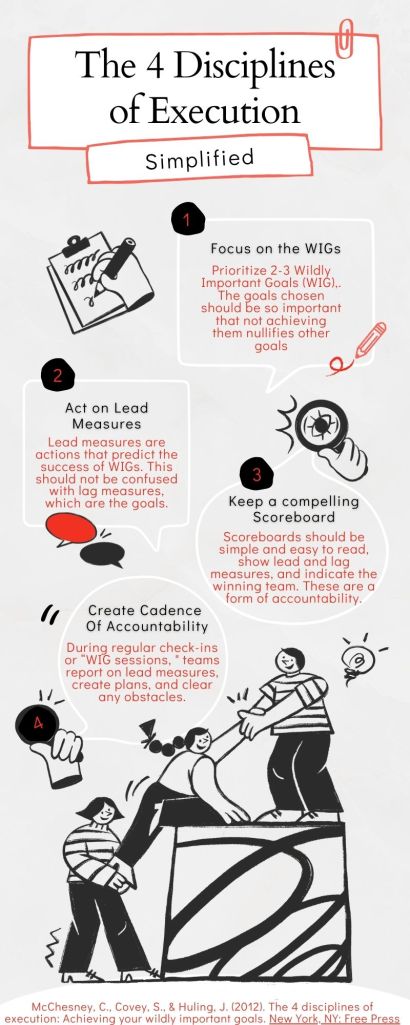
When it comes to the 4DX plan, “there are two principal things a leader can influence when it comes to producing results: your strategy (or plan) and your ability to execute that strategy” (Covey, 2021). Planning is half the battle in creating a culture of execution was the portion of the 4DX model that most leaders struggled with. If you look at the infographic, the 4DX is designed to be a simple four-part strategy for companies to focus on the two to three most important goals for the company or for each team.
However, often, team members get caught in the whirlwind of day-to-day company tasks. Covey defines the whirlwind as anything that is required to keep the company afloat on a daily basis. If the 4DX model is not implemented correctly using WIGs, lead measures, scoreboards, and accountability, many fall victim to burnout caused by the whirlwind.
However, to avoid falling victim to the whirlwind, it is important not to approach the 4DX plan with a quick-fix mentality, which is defined as “a low threshold for pain that constantly seeks symptom relief rather than fundamental change” (Friedman et al., 2017). As the 4DX model itself states, it is a simple plan; however, executing one’s plan is neither quick nor easy.
Installing the 4DX Within my Organization
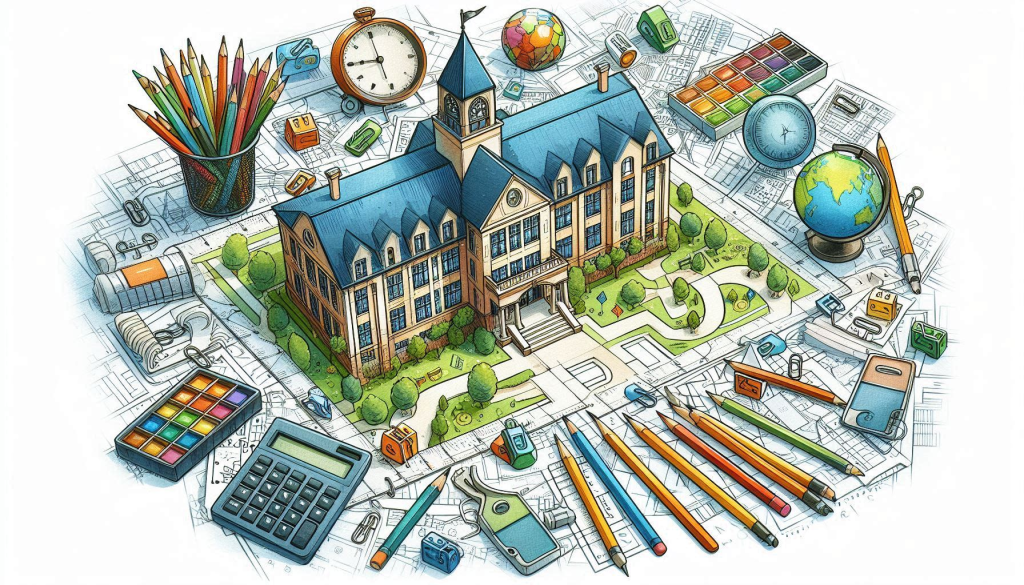
Image created by Samara Marin Using Microsoft Copilot 2024
When installing the 4DX within my organization for my innovation plan, creating a WIG for each level is the best course of action. This will ensure that no level is overexerting itself with the amount of work it exerts towards the lag measure or end goal. After much consideration, I came up with this idea because it takes into account the possibility of the different knowledge levels within the organization when it comes to technology. My innovation plan changes the current homework policy into a flipped classroom setting. The more I have researched the flipped classroom, the more I have noticed that professional development is crucial for my innovation plan to succeed, and a part of the professional development needs to focus on AI use within the classroom and task automation.

Discipline 1: Focus on the Wildly Important Goals (WIGs)
Image created by Samara Marin Using Microsoft Copilot 2024
The levels will be administration, departments, and individual educators when creating WIGs. If I create too many WIGs, administrators will be in charge of implementing and keeping track of them. However, if I create a WIG per level, a leader within each level can report back to the main administrator at each campus. For example, the individual will report to their department head on their individual goals, then the department head can report on both the WIG for the individual within the department and the departmental WIG.

Campus Administrator WIG: Campus administrators will be charged with finding professional development that fits the technological needs of their respective campuses. Administrators will need to ensure that the educators go through initial training, follow-up training, and end-of-year training at least. When looking at our district calendar, we have nine professional development days that need to be used to their full potential.
Departmental WIG: Each department will be charged with finding and implementing a department specific program for their subject and grade levels.


Individual WIG: This is specific to every educator within the district. Each educator must work with one of the programs implemented by the district, department, or found individually.
These WIGs would work for our district because we are small and only have nine district/campus wide professional development days for the year. Each campus administrator knows what their campus needs best and can track their campuses progress. Within the campus, we have our grade level or subject departments depending on if it’s elementary, middle, or high school. A program used in second grade does not always work for a tenth grade class.
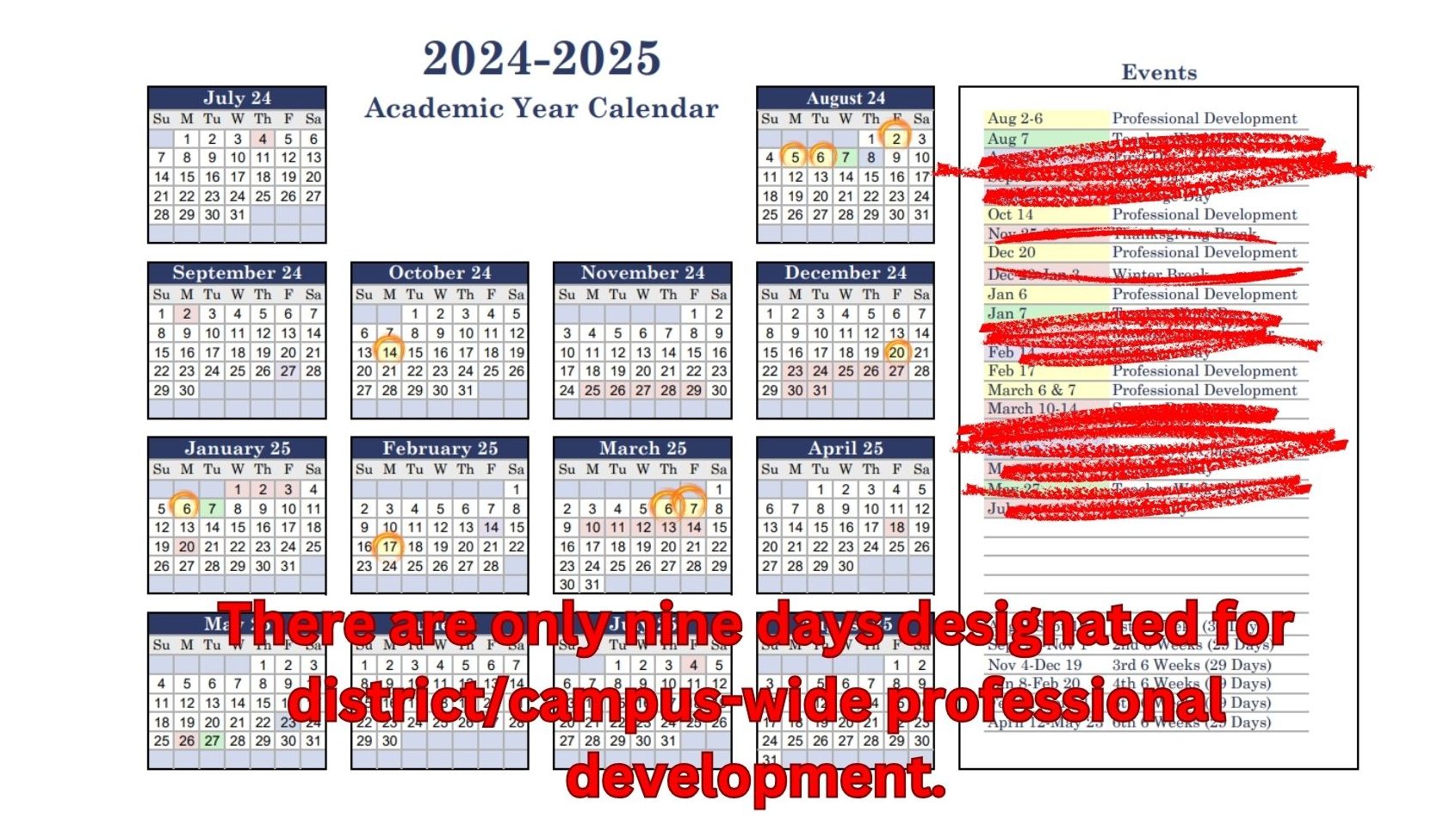
To make up for the minimal professional development days, our school days end early on Fridays, allowing for one-hour professional development scheduled by campus administrators. These professional developments can be brought in from outside resources, or if an educator within the campus has a program they would like to present, then that educator or department can create a workshop presenting the program to the campus. This means that these WIGs target individual campus needs while letting educators present programs or technology they have learned about to their campus. For example, I will assist with a presentation on an AI grading system our district purchased and tested to prepare students for the new STAAR grading system.
Discipline 2: Act on the Lead Measures
Image created by Samara Marin Using Microsoft Copilot 2024
Each level will have their own lead measure as within our district we have administrator meetings either weekly or monthly and department meetings weekly in the form of professional learning communities (PLCs).

Administrator lead measure 1: Keep track of campus professional development to ensure that there is one at the beginning, middle, and end of the year.
Administrator lead measure 2: Keep track of educator knowledge about the technology being implemented district wide either through embedded analytics or forms sent out weekly. An example of this is, Clever one of our district platforms allows our administrators to know who is using the program and how often.
Departmental lead measure 1: Departments must find and implement one department specific program for the classroom. This can mean that it can help with planning or be implemented in the classroom.
Department lead measure 2: Department heads must keep track of the program usage within the department weekly. After discussing it with the department, they must monitor and adjust if the chosen program is failing.


Individual lead measure 1: Keep track of implementation progress of chosen program and accumulate data.
Individual lead measure 2: Create a professional development alone or with a coworker using the same program to present at a Friday professional development.
Discipline 3: Keep a Compelling Scoreboard
Image created by Samara Marin Using Microsoft Copilot 2024
The scoreboards will be posted depending on which WIG they represent.
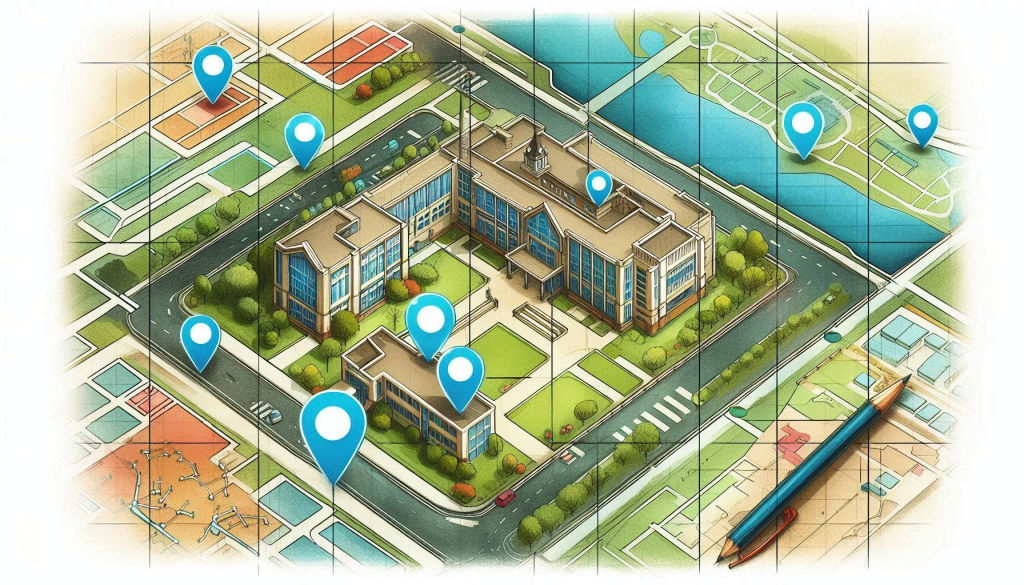
Administrative scoreboard: There is an administrator building where the administrator meetings are held at least once a month but can be up to once a week. This is where the administrative scoreboard will be posted, and after the weekly meetings, each administrator will be in charge of sending the program usage data to their respective campuses.
Departmental scoreboard: Departments have weekly meetings, and just like districtwide, departments will track departmental usage of their chosen program. The data will be posted outside of the department heads classroom.


Individual scoreboard: At the beginning or the weekly campus meeting, each educator will update the scoreboard located in the cafeteria (this is were we have our weekly campus meetings). The scoreboard will track the individual educators education, implementation, and data for the program of their choice to implement in the classroom.

Discipline 4: Create a Cadence of Accountability
Image created by Samara Marin Using Microsoft Copilot 2024
Each level will have to report to the level above them. The individual will report to the department head and the administrator; the department head will report to the administrator; and finally, the administrators will report to each other and the CEO during administrator meetings.

Administrator plan: The administrators will review what happens at each campus monthly. This will allow administrators to discuss how the district-wide program is working, whether a particular department found a program that would benefit a different campus, or assist each other with any issues that arise at their campus.
An example would be during one of our district-wide professional developments the highschool taught the middle and elementary school some tricks that can be done using Noredink.
Departmental plan: Departments will meet weekly to go over usage data and troubleshoot any problems that arise. If a program can be used across departments professional development can be created.
An example would be when the English department was tasked with creating a FAQ for Microsoft forms that could be shown to the campus and then sent out to all the teachers.
Individual plan: Each individual will report to their department head, and they will also update the campus scoreboard during weekly campus meetings. If an individual finds an online resource then they can work alone or with a coworker to create professional development.
An example of this is when I created a professional development for Lead4wards instructional strategies playlist for new teachers.

4DX and the Influencer Model
Image created by Samara Marin Using Microsoft Copilot 2024
When it comes to the 4DX model and the influencer model, it isn’t an either-or situation. The 4DX and the influencer model work together to create an environment of execution. As stated before, the 4DX is a set of goals for an organization and not a quick-fix solution. It can be used alone, but it does not account for the social aspect of an organization. The influencer model shows the importance of leveraging the social influence of those within the organization and their motivations and skills. Meanwhile, the influencer model still needs to be completed as it sets forth social goals yet falls short of setting tangible goals that can be measured, met, and seen when a plan is still in the works.
While one model can work without the other, using them in conjunction with one another allows for the gaps to be filled within any successful leadership plan. The influencer model fills in the social gaps in the 4DX model, considering the 4DX model states that execution falls short due to those within the organization getting caught up in the whirlwind of day-to-day tasks. During an interview, I conducted, my classmates in the master’s program and I discussed how, at the beginning of the school year, most teachers feel positive about implementing new strategies; however, once we reach the third week or month, we revert to what we know. (If you are interested in the full interview, it is at the bottom of this page). The influencer model can create a simple culture of ensuring that educators in an organization are smiling and meeting students at the door to the classroom because of the organizational influencers who can be heard yelling “good morning!” down the halls.
The 4DX model ensures that no one gets bogged down with too many goals by implementing WIGs. The model keeps the organization and those within it focused on the most important goals and ensures that those goals are specific, measurable, achievable, relevant, and time-bound (S.M.A.R.T.) goals.
While one model can work without the other, using them in conjunction with one another allows for the gaps to be filled within any successful leadership plan.

References
Covey, S., Chris|Huling, Jim|Thele, Scott|Walker, Beverly. (2021). 4 Disciplines of Execution: Revised and Updated: Achieving your Wildly Important Goals. Simon & Schuster.
Friedman, E. H., Treadwell, M. M., & Beal, E. W. (2017). A Failure of Nerve: Leadership in the Age of the Quick Fix. Church Publishing.
Grenny, J., Patterson, K., Maxfield, D., McMillan, R., & Switzler, A. (2014). Influencer: The New Science of Leading Change. McGraw Hill-Ascent Audio.
YouTube. (2015, August 13). Friedman’s Theory of Differentiated Leadership – Made Simple. YouTube. https://www.youtube.com/watch?v=FaifIIeQC9k
YouTube. (2016, May 16). Introduction to 4DX OS. YouTube. https://www.youtube.com/watch?v=KOhF6T5D8X8&t=184s
YouTube. (2017, February 10). The 4 Disciplines of Execution in a Nutshell. YouTube. https://www.youtube.com/watch?v=mP7sq_tGZj8
YouTube. (2020, February 11). Move your Middle Chris Mcchesney. YouTube. https://www.youtube.com/watch?v=cbQfozH2KxM


 Marin's Eportfolio
Leave a comment