
Student Choice, Ownership, Voice, and Authentic Experiences
Image created by Samara Marin using Copilot 2024
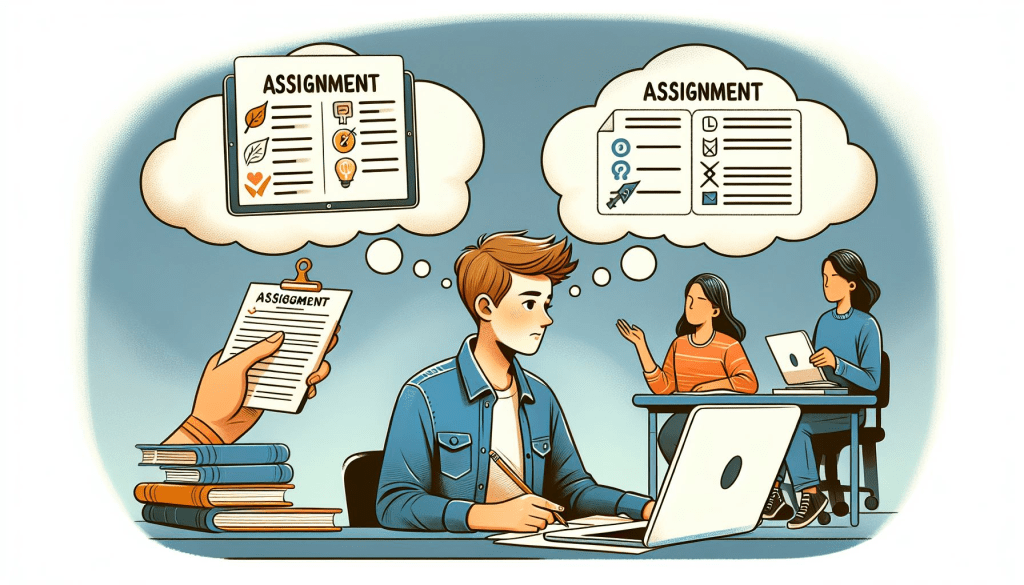
According to Heather Wolpert-Gawron, “In terms of creating evidence of knowledge, the intense structure of “do this, like this” is not as effective as “what way would best work for you?”’ (2018) Most people don’t like to be told do this because I told you so, and even when given a reason it often takes more time to explain why the teacher’s way is better. After spending fifteen minutes explaining why the original method is better, wouldn’t having the student explain their reasoning for their method work as two assessments? As a formative assessment through their explanation and a summative assessment with their final project? “Student choice allows students to display their learning in the way that they feel best represents their knowledge.” (Woplert-Gawron, 2018) As teachers, we have to think about all of our students, but each student only has to think about themself and “students are often quite insightful about their learning needs.” (Parker, Novak, Bartell, 2017) Parker, Novak, and Bartell go on to say that while students don’t always need to have choice in what the entire assignment is, having a choice to make adjustments to fit the students needs may improve student engagement. In order to achieve a student-centered environment, teachers need to be willing to relinquish some control and meet students in the middle when it comes to planning assignments.
When it comes to Creating Significant Learning Environments, COVA plays a major part in the learning environment. When we as educators think of the learning environment and our classroom as a whole, we may need to remember that our students will be inhabiting these classrooms anywhere from 45 minutes to 8 hours of their day, depending on the grade level we teach. For the learning environment to work, we can not have the students constantly at odds with the environment they are already forced to be a part of by having COVA at the center of our classroom. COVA gives students some choice in their learning. But what is COVA?
Choice– Students are given a choice in their work. This can mean as far as the medium/method in which they learn, how they present their learning, and how they interact with their environment. When students feel as though they are included in the decision-making process, they are more likely to engage in the outcomes of that process.
Ownership– Students are given the choice of using ePortfolios, projects, or other learning tools during the learning process or to demonstrate learning. When students feel as though they own their learning, they have a stake in making the process a success.


Voice– When students are given choice and ownership they find their voice to share their ideas with their peers. Students will communicate how they wish to structure their ideas better with their teachers. Both types of communication student to student and student to teacher will lead to a more student-centered environment.
Authentic Experiences– Authentic Experiences looks different for each student. This is because each student’s goals are different after graduation. Authentic learning means the classroom must mirror the real world. Real-world projects will engage students as they see their learning outside the classroom.

But why spend so much time teaching students to think for themselves? This year, I gave students the choice at the beginning of the school year (2023-2024) to write an editorial on any topic. The only criteria I gave them were that it had to be an opinion and school-appropriate. It is pertinent to the story to say that I teach sophomores, and when I give students a choice, I don’t say no; I ask why. If they can answer why, they can use the topic, do the project, etc. I prefer to know why a student a student wants to research a topic. If their response is “just cause,” then that is when I say no. Back to the story, due to those being the only two criteria, I had quite a few students in each class staring at me with a deer-in-the-headlights look. When asked what’s wrong, they responded with variations of “What do you mean,” or “You pick a topic.” It took a class period to explain to students that their “opinion” couldn’t be wrong. As I had planned for this editorial project to last a week, I had to adjust and allow them the weekend to finish the assignment; even after explaining that as long as they could explain why they wanted to write about their topic, many students were confused. I expressed my confusion about their confusion, and one student told me, “Well, miss, we aren’t given options often; we don’t know what to do with them,” and she laughed. However, it was a nervous laugh. She wanted an easy to follow point by point rubric that told her exactly what I wanted them to write. But I wanted them to show me that they understood our lesson on editorials from the week before.
By carrying the mental load of creating every aspect of previous projects for the students, this group was afraid to pick the wrong topic. The odd part is there was no “wrong topic” as long as they could tell me what interested them about the subject. After an entire school year, most students can pick their topics but also look forward to defending them. That being said, some students are so used to having every part of a task assigned to them that they would prefer having half of the job done by having the teacher assign the topic.
“Recent events show that there has never been a more crucial time for critical thinking.”
-Helen Lee Bouygues, Forbes Magazine 2022
As we attempt to move to a more student-centered learning framework, Lee Bouygues summarizes the National Assessment of Academic Progress (NAEP) findings in the Forbes article linked above. In the summary, she states that parents and teachers agree that critical thinking skills are crucial in a time of online misinformation. However, the NAEP shows that from 4th to 8th grade, the emphasis on deductive reasoning drops by half. But what are the reasons for this? Is it a lack of time? Is it state or standardized testing? If parents, teachers, and students have all expressed that critical thinking is necessary, why fight student-centered learning strategies like COVA, which embrace critical thinking? “By sticking only to requirements, teachers can rob kids of thinking for themselves, creating independently, and using their imaginations.” (Larmand, 2022)
We have seen how teachers feel about COVA, so I will end this with a video showing the students’ point of view of COVA. Students explain their choices regarding their projects.

Would You Like To Read My References?
Image created by Samara Marin using Copilot 2024
Chiaro, C. (2022, December 14). The benefits of student choice. TeachHUB. https://www.teachhub.com/professional-development/2020/12/the-benefits-of-student-choice/#:~:text=Student%20choice%20allows%20teachers%20to,designing%20the%20process%20of%20knowledge.
Eduporium weekly: The growing importance of student choice. Eduporium Blog. (2022, October 23). https://www.eduporium.com/blog/eduporium-weekly-the-importance-of-student-choice/
Harapnuik, D., & Thibodeaux, T. (2023). COVA: Inspire Learning Through Choice, Ownership, Voice, and Authentic Experiences (2nd Edition).
Merrill, S., & Gonser, S. (2021, September 16). The importance of student choice across all grade levels. Edutopia. https://www.edutopia.org/article/importance-student-choice-across-all-grade-levels/
Reimagining classrooms: Teachers as learners and students as leaders: Kayla Delzer: TEDxFargo. YouTube. (2015, October 13). https://youtu.be/w6vVXmwYvgs
Staff, K. (2024, March 28). To engage students, give them meaningful choices in the classroom. Kappan Online. https://kappanonline.org/engage-students-give-meaningful-choices-classroom/
Student Voice and choice. YouTube. (2017, July 6). https://youtu.be/MVRCEq5jZkU?si=ZnrwGWFH2xa2cA2l
Wolpert-Gawron, H. (2018, November 18). Why choice matters to student learning. KQED. https://www.kqed.org/mindshift/52424/why-choice-matters-to-student-learning


 Marin's Eportfolio