
What is an ePortfolio?
Image created by Samara Marin using Copilot 2024
To begin any discussion of “why” something should be done, first we must first understand “what” it is that we are doing. According to the University of Waterloo, “While ePortfolios might be described as digital collections of artifacts, good academic ePortfolios also represent a process.” EPorfolios show the growth of the owner in their respective learning journey. This journey can be that of a high school student in a class, from 9th grade to senior year, or even a student with any form of college degree. This being said ePorfolios are not limited to the learning realm as there are three types of ePortfolios mentioned:

Assessment ePortfolios: Audience internal- The goal of this type of ePortfolio is to support the assessment of institutional outcomes.
Learning ePortfolio- Audience student themself- The goal of this type of eportfolio is to track the student’s learning journey. It is a self-reflection ePortfolio.


Career/Transfer ePortfolio-Audience External- The goal of this type of ePorfolio is to showcase the student’s achievement to possible employers or transfer institutions.
It is essential to understand that an ePortfolio reflects who the student is; therefore, an ePortfolio is a student-centered project no matter which of the three ePortfolios is being created. The student is the one being presented, and it is their digital footprint being put on the internet “because ePortfolios are a student-centered activity – one in which the student is free to choose what artifacts are included, and is free to reflect on the process of their learning they foster engagement and motivation.” (Waterloo University) So, at it’s core the ePortfolio fits into a COVA classroom if that is something a teacher is interested in implementing in their classroom. Waterloo University has a concise yet informational article about what an ePortfolio entails.

Who Owns the EPortfolio?
Image created by Samara Marin using Copilot 2024
One of the questions that always pops up when it comes to ePortfolios is: If students are being told what to write and then graded on it, then who really owns their ePortfolio?
When we think of COVA + CSLE, the learner still owns the ePortfolio.
When it comes to choice, learners are given the freedom to choose (C) how they wish to organize, structure, and present their learning experiences and evidence of learning. (Harapnuik, p. 24). So, learners are still expected to show evidence of learning as a part of the learning process they simply get to choose how to do so. But COVA hopes that students will be more willing to show their best work because they are taking ownership of their learning and are given authentic real-world learning opportunities (such as the ePortfolio).
On that same note the text book states that for CSLE to work it requires:
- Student-centered
- Teaching roles – Presenter, Facilitator, Coach, & Mentor
- Ubiquitous Access & Social Networking
- Instructional delivery formats – face2face, technology-enhanced, blended, online
- Instructional Design
- Assessment & Evaluation
- Academic Quality & Standards
- Support & Infrastructure (Harapnuik, p.25)
So some form of assessment is required in order for COVA+CSLE to work.
So if this is the case, how can we put a grade on something that is owned by the learner? It is still the learner’s, but like everything else in schools, creating an ePortfolio in school is like doing something with training wheels. Audrey Watters states, “Often when schools talk to students about their presence on the Web, they do so in terms of digital citizenship: what students need to know in order to use technology “appropriately.’” Then goes on to say how we don’t allow students to actually demonstrate appropriate digital citizenship; we simply show them examples of bad digital citizenship. Harapnuik’s learning philosophy starts out by stating, “An old adage states: “Tell me and I forget, show me and I remember, involve me and I understand.” I like to take this a step further by adding “Challenge me and I learn.”’ (Harapnuik) So why not start involving students in the learning process?
Let’s show teaching the ePortfolio process by mirroring it to a popular model for classroom instruction: I do, we do, you do.

Once we as teachers are done with our portfolio, we will have what we use to show our classes as an example of what an ePortfolio should look like. Teachers can then show their ePortfolio for the “I do” stage in order to model to the classroom what ePortfolio and digital citizenship etiquette should look like. In a comprehensive review conducted by The International Journal of ePortfolio, one of the main findings was students were having trouble blurring the lines between assessment and personal, causing students to struggle with when students used images they did not always blur faces. (Wilson, Slade, Kirby, Downer, Fisher, and Nuessler. 2018)
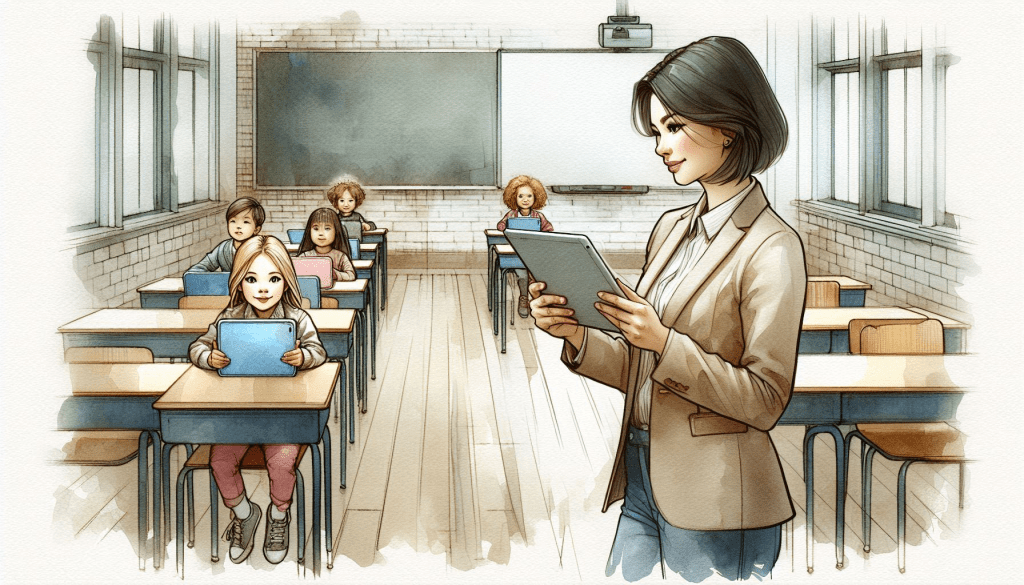
Then, we will move on to the “we do.” Just like when driving a car, learners must go through the permit stage. We must help students learn what digital citizenship looks like, so before releasing them into the digital world, we must guide them through what we do by letting them create posts with boundaries to ensure they don’t ruin their digital footprint. Grading them will ensure that they are creating posts, learning how to work their website and that they are following all of the guidelines. As teachers, we create the boundaries necessary to ensure that students understand that they will be creating their ePortfolios in a public space. By grading assignments, we can catch any mistakes or possible damaging effects on their digital footprint early. Similar to how a new driver learns to drive with a passenger assisting them along the way. The ePortfolio still belongs to the learner, similar to how a new car still belongs to the driver, we are simply in the training wheel stage.
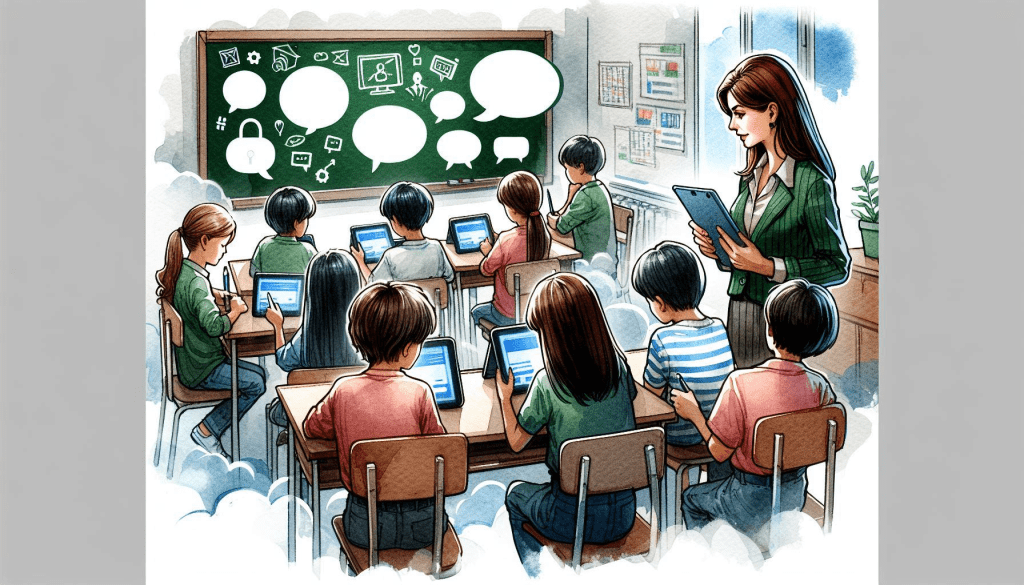
Finally, once the students demonstrate understanding, they will have the basic structure for their ePortfolio, some posts to get them started that they can keep or hide, and a primary direction in their journey. Now, students can do the “you do,” which is the independent work of running their ePortfolio how they see fit now that they know what goes into digital citizenship and creating an ePortfolio. The ePortfolio was theirs from the beginning, but as facilitators, we simply ensured they hit minimal road bumps along the way.
Why Use an ePortfolio?
Image created by Samara Marin using Copilot 2024
One of the main reasons why I was afraid to use an ePortfolio at first was because everything I published would be out there for everyone to see. However, this was due to needing to be exposed more to the online environment. As I go through my ePortfolio journey, I can see my old posts as a map of where I am and where I have been. If I no longer feel the same way, I can unpublish the post but still have access to my thoughts. The webpage recognizes that both are benefits because it shows anyone looking at the portfolio that the writer is a human constantly learning like anyone else.

Many schools prefer Learning Management Systems (LMS), and I have an LMS in my innovation plan; however, at the end of a specific time period, the”student loses access to the LMS when courses end, while ePortfolios remain the student’s property after finishing university.” (Waterloo University) This could be at the end of the school year or when the student graduates. This could also happen to educators who rely on school-provided emails to store their accumulated files and intellectual property. Once they lose access, they lose months or years of work. EPortfolios work as a digital filing system to keep track of all of the students’ and educators’ intellectual property. There are free sites; in my case, a person can pay the yearly cost for their domain for less than the monthly cost of a streaming subscription. LMS and EPortfolios can be used to create a cohesive online experience for students. Students can submit assignments for grades in the LMS and, if they choose, upload them to the ePortfolio for longevity purposes.

Regarding professional development, ePortfolios can be an excellent way to track which ones we have attended. It is also a good way to see how our philosophy as a teacher has evolved or how the teaching environment has evolved as we progress in our careers. As someone who plans on retiring as a teacher, I would like to have a place that shows my personal growth as well as somewhere where I can return to show my account of the evolution of education during my time as a teacher. During my time in the classroom, as both a student and teacher, I have seen significant shifts in the way a classroom looks. Having more educators create ePortfolios as a living collaborative space to see the evolution of education happen in real time would be interesting. Having worked with LMS in the past, as both an educator and a student, I have lost files that I can never retrieve.
Finally, when I feel like I have not accomplished much, I can return to my portfolio and see my growth and where my journey has led me. It is a good reminder as to what I have accomplished for example, looking at my first couple of blog posts and compared to my most recent, I have learned quite a bit with WordPress. I am looking forward to learning more, and while I hope to be a lifelong learner when I reach retirement age, it will be nice to have a place to look back at what I have learned.

COVA and My ePortfolio
Image created by Samara Marin using Copilot 2024
ePortfolios are rooted in Choice, Ownership, Voice, and Authentic Learning Experiences (COVA). Even when those creating their ePortfolios start with a theme, as I did, we begin to branch out and change that theme to fit our image. I changed the original layout of the blog page, which can be seen in the check-in post, because there were no navigation arrows in the original. I began adding pops of color as I continued to differentiate the images, which were header images and images meant to break up my paragraphs so there was a block of text. Once I began to see my ePortfolio as my own, I began to collaborate with my classmates and instructors to see what aspects of the assignments I could take ownership of.
One of the biggest aspects that I felt a strong urge to take ownership of was the compilation assignments. This is because in my mind, it makes sense to have a regular blog to dump all of my blog posts into, but to also have each of my compilations assignments be a “page.” My reasoning for this is that, as is visible below, I have a mini blog on each compilation page that highlights the blog posts specific to each course. This allows any visitor to decide whether to see all of my blog posts at once or to see them sorted by page. The final option is that each post has a category attached to it I started doing during this course in order to allow visitors to see which posts have similar themes.
Pages vs. Posts were an incredible dilemma in my mind throughout his course. We were given topics and the option to blog about what came to us. When it came to topics that came to us, such as the topic of AI images, a book report we did as a campus, or even the reflections requested of us, those made sense in my mind as blog posts. Those were heavily reliant on me as a person, whereas other topics such as COVA and the Who, What, and Why of an ePortfolio made more sense as a page. This is why my ePortfolio and COVA pages were created and added to the navigation bar instead of turned into blog posts. Both topics, COVA and ePortfolios, need to be highlighted in the Applied Digital Learning (ADL) discussion. The only reason the growth mindset is not a page is because the growth mindset is something that should evolve as the educator’s learning journey continues.
While taking my ePortfolio in my own direction may have taken my ePortfolio in the most unexpected direction it is a direction that makes sense in my head. Will this direction cause me to have to discuss certain decisions I make involving my ePortfolio? Yes. However, discussions aren’t a negative factor in the learning community. If a discussion is happening learning is happening and I joined this program to learn.
If you would like some examples of blog posts, below are some examples in which I was given choice, took ownership, used my voice, and felt an authentic learning experience take place. Through these posts I learned how to utilize my ePortfolio to the fullest using my website of choice: WordPress.

Evolution of Images in my Blog
The speaker initially struggled to find and use images for their blog posts, aiming for a cohesive personal touch. They…


Check-In: How much have I learned?
The author reflects on their journey of developing their ePortfolio on WordPress. Through trial and error, they improved the visual…

Learning Manifesto: A Reflection
The author reflects on their mindset shift during a master’s program. They initially followed a formulaic approach but now feels…

Growth Within the Growth Mindset
This content discusses the importance of considering the “why” in addition to the who, what, when, where, and how when…

5303 and 5313 Contributions
The author reflects on their journey in the Applied Digital Learning program, initially feeling fearful but eventually embracing collaboration and…

References
Image created by Samara Marin using Copilot 2024
41 benefits of an eportfolio. Stable Transitions. (2010, September 30). https://kbarnstable.wordpress.com/2010/01/08/41-benefits-of-an-eportfolio/
EPortfolios explained: Theory and practice. Centre for Teaching Excellence. (2023, November 14). https://uwaterloo.ca/centre-for-teaching-excellence/catalogs/tip-sheets/eportfolios-explained-theory-and-practice
Harapnuik, D. ; Thibodeaux, T. (2023) COVA: Inspire Learning Through Choice, Ownership, Voice, and Authentic Experiences. Learner’s Mindset Publishing. Kindle Edition.
Harapnuik, D. ePortfolio. Harapnuik.org. (n.d.-a). https://www.harapnuik.org/?page_id=5973
Harapnuik, D. YouTube. (2020, May 25). LMD EP30 Eportfolio Why. YouTube. https://www.youtube.com/watch?v=hx304CW-gKU&t=1325s
Learning Philosophy. Harapnuik.org. (n.d.-b). https://www.harapnuik.org/?page_id=95
Watters, A. (2019, June 25). The web we need to give students. Medium. https://brightthemag.com/the-web-we-need-to-give-students-311d97713713
Wilson, C. B., Slade, C., Kirby, M. M., Downer, T., Fisher, M. B., & Nuessler, S. (2018). Digital Ethics and the Use of ePortfolio: A Scoping Review of the Literature. International Journal of ePortfolio, 8(2).


 Marin's Eportfolio