Transforming Professional Development into Effective Learning
How Can We shift from Professional Development to Professional Learning?
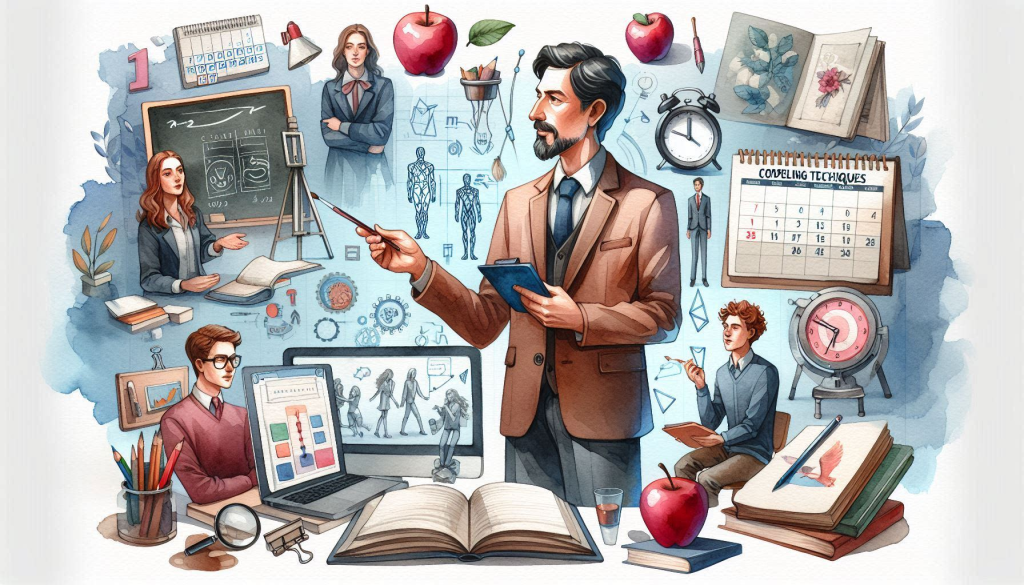
Created by Samara Marin using Microsoft Copilot 2024
“All genuine learning comes through experience.”
-John Dewey
At the beginning of the professional learning course, those within the course discussed how our respective districts handled professional development. Many of the students within the course, expressed dissatisfaction with the way professional development is handled at each organization. Each mentioned how their districts either focused on the core subjects (math, science, social studies, and reading) which left the rest of the courses feeling as though they are sitting through a wasted day. Another reason is despite what educators are learning are best practices in the classroom, constant movement, modeling, having students practice what they are learning, many of the professional development that educators attend follows a lecture model of learning. Why is it that we know the best practices to enhance learning in students, yet don’t use them when it comes to educators?
Created by Samara Marin using Microsoft Copilot 2024
However, this sentiment does not simmer only amongst students within the professional development course. Many professionals feel the exhaustion of being thrown into a day or week’s worth of information requires more time to process the information. If educators are not given enough time to process the data, they are less likely to utilize what they are being taught and more likely to revert to what is tried and true. Education for educators needs to change just as much as education itself. We know what works but only apply it to students in a traditional classroom; however, the professional learning environment is still a classroom even though it does not look like it in the conventional sense.
In the blog post written below, it is easy to see how shifting the way we think about professional development can create a learning environment in which educators can feel the learners’ mindset sparked. In the blog posts context, the shift in mindset is demonstrated using the topic of AI in the classroom.
Created by Samara Marin using Microsoft Copilot 2024
When it comes to professional development, the five principles are well known and important to follow in order to make it meaningful for those who attend, whether educators are in the K-12 sphere, higher education sphere, or teaching in the professional environment. Allison Gulamhussain set out five principles necessary to make professional development meaningful for those who are attending as learners. Those principles are:
Principle I: The duration of the professional learning must be significant and ongoing. It can not be a one-and-done professional development environment like most districts are used to doing.
Principle II: It must be specific to the challenges those involved in the professional learning process face. It is easier to keep the attention of those with a stake in what is being taught.
Principle III: The initial exposure should be engaging. If an educator does not interact with the content, then there is no way to know if the educator is digesting the content.
Principle IV: The information being taught must be modeled to ensure that educators do not misunderstand it.
Principle V: The content should be specific to the educators involved in the professional learning environment and/or grade level.
If you are interested in what these principles could look like in the professional learning environment, an example is presented in the blog post below. The blog post presents an alternative professional learning environment in which a district learns about AI integration over a year in their specific district to assist with implementing the flipped blended learning classroom outlined in the innovation plan. This post outlines what the professional learning will look like from the three-column table to the outline needed to plan the professional learning environment.
Created by Samara Marin using Microsoft Copilot 2024
Finally, to commence the new form of professional learning, educators must be introduced to the concept cohesively, similar to how students are introduced to a project before they are expected to create something amazing. By having educators learn new ideas and essentially create their learning through constructivist theories, this process can be repeated with genuine but different results each time. This is because as we go through each school year with varying sets of students, we will learn through our co-workers and students who have been growing up with much of the technology we are learning today.
Some examples of resources that educators can be introduced to at the beginning of the year can be found in the blog post below.







 Marin's Eportfolio