
Big Hairy Audacious Goals
Image created by Samara Marin using Copilot 2024
When it comes to becoming an educator, I do not always see long-term goals in front of me. In my first year as a teacher, I was thrown into the classroom at the beginning of the second semester. Everything was so fast-paced that I had to plan from week to week, and I felt as though I couldn’t keep up with the work. I remember the day I joined my district team it was January 15th, 2019, and with midterms in January, the benchmarks at the beginning of February, and STAAR at the end of March, I could only react, not plan.

I walked into the classroom and was swept into the chaos of testing season in our district. However, once the STAAR test was over, I could sit and plan my goal for the rest of the year. I spent a week looking at what unit six entailed for English II. The title of the unit gave me the end goal: “Unit 06: Researching, Synthesizing and Producing in Multiple Genres and Modes (25 Days)” (TCMPC Teks Resource System). Mr. Hill, the U.S. History teacher who had been teaching for years, told me the key to teaching a STAAR-tested subject was to plan my units in a way that gave me three spare weeks for review. Before he told me this, it had yet to occur to me to plan in units instead of in lessons or weeks. So, I practiced with the final unit in my first year as a teacher and created my favorite assignment, which I teach every year: the research paper.
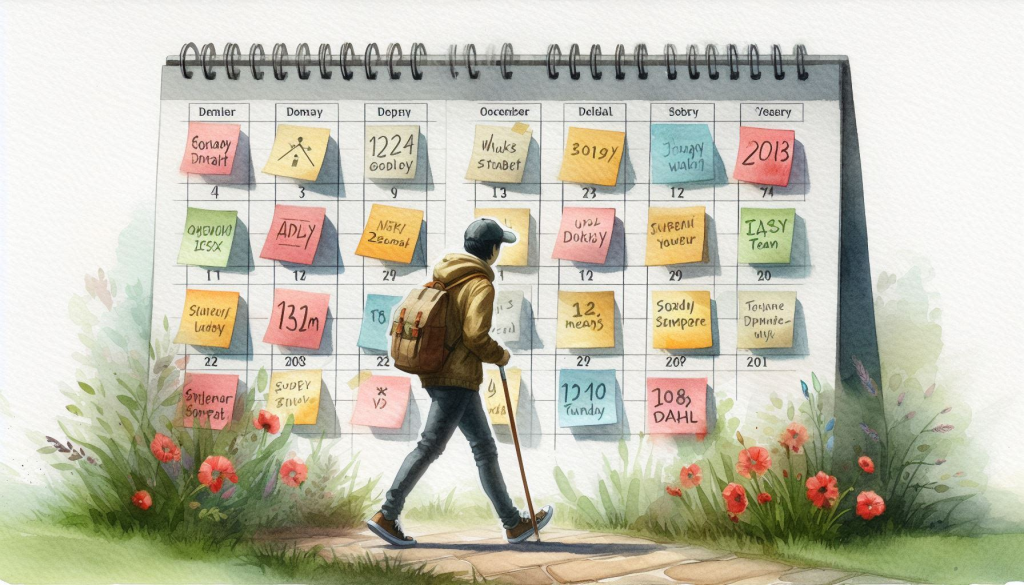
What made these lessons easier than the rest in my first year was that I planned it based on how I wanted the unit to end. I had a Big Hairy Audacious Goal (BHAG) before I knew what BHAGs were. I collaborated with Mr. Hill to add a history component to the lesson so I had someone to ask questions when needed. I also connected the lesson to a book with historical context to add real-world experience. Since that first year, this make-shift last-minute project has evolved each year as new students test the limits of the research project.
BHAGs and CSLE
Image created by Samara Marin using Copilot 2024
How do Big Hairy Audacious Goals (BHAGs) fit into Creating Significant Learning Environments (CSLE)? When designing curriculum for our courses as educators, Dr. L Dee Fink believes, “In order to teach well, one must be competent in both course design and teacher-student interactions” (Fink, 2003). When it comes to the course design, the educator must be aware of every aspect of the course, from assignments to assessments, even to classroom discussions, whether formal or informal. On the other hand, when it comes to the student, the educator must be aware of the different mindsets walking into the classroom, different learning styles, and different levels of education. Both halves of creating a course are necessary for creating a significant learning environment for the student. However, it can be overwhelming if an educator begins by nitpicking the little things first.

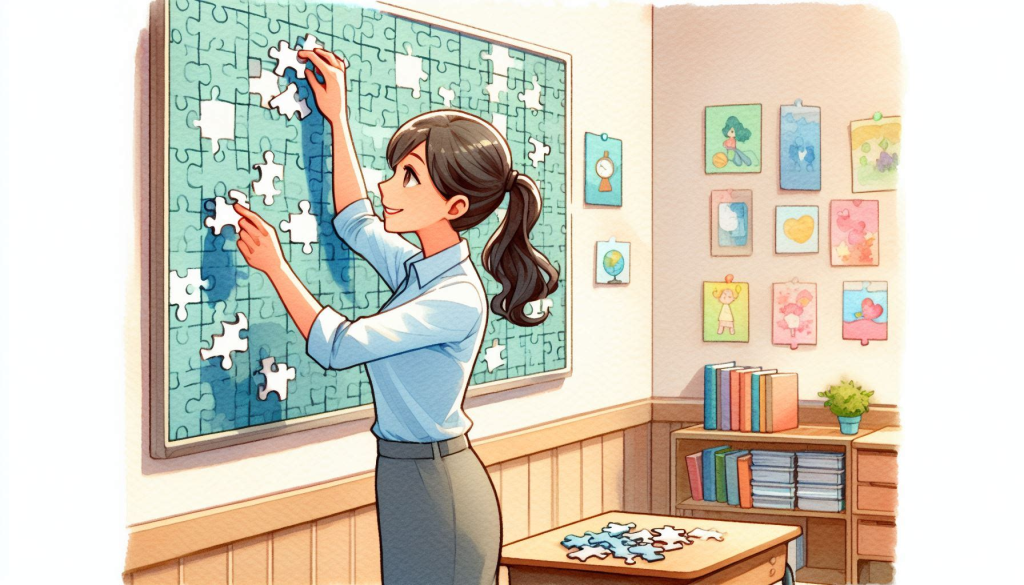
BHAGs come into play because they allow the educator to see the entire picture. Often, we talk about how the goal post is near; however, we don’t often realize how that goal post is what is helping us complete the tasks at hand. Creating BHAGs for every tier of the instructional process and then breaking down the BHAGs makes the planning process seem much less daunting, especially to our first-year teachers, who feel they are constantly reacting. Think of the Big Hairy Audacious Goal as a puzzle box and the unit/course we are planning as the puzzle. When completing a 1000-piece puzzle, we often look back at the image on the box to remind ourselves what it looks like. Our BHAGs do the same in creating significant learning environments; they are our boxes with our pictures showing us how the puzzle pieces of our lessons come together to build units and, finally, our courses, depending on how in-depth our goals are.
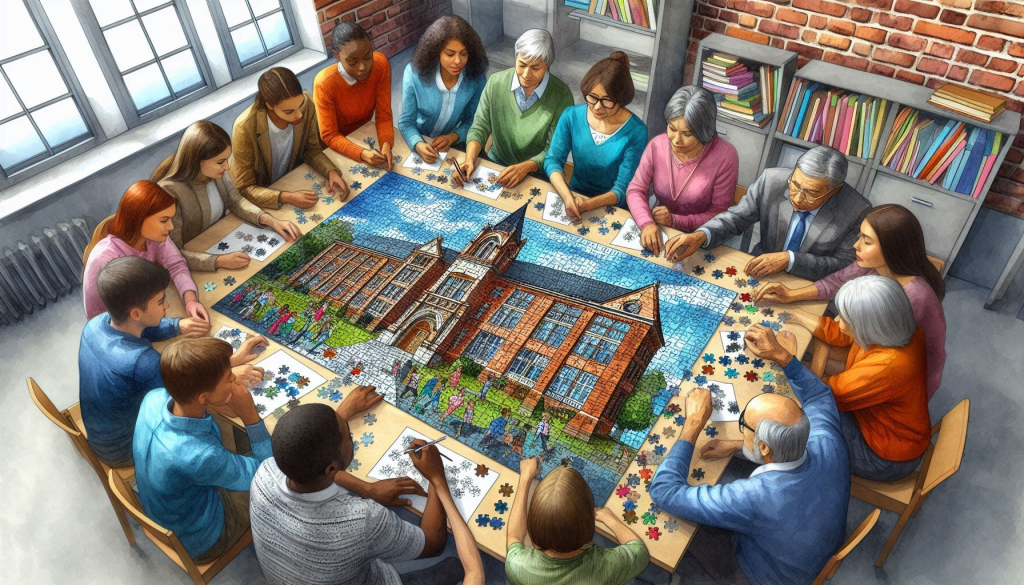
On our campus, we have professional learning communities (PLCs), which consist of our department, and we have grade-level meetings every so often. I am the department head for the English Department, so I get to see how the BHAGs work on a departmental level. As a department, we know what our students are expected to learn at our grade level for our subject and at the next and previous grade levels. Our overall BHAG for our students is to become better writers by their senior year so they can write better essays and have a good foundation for writing scholarship essays in their senior year. We use the backward design method mentioned in Fink’s model and start from senior year to know what is expected of their essay writing by their last year in high school. We break it down using the Teks resource systems vertical alignment tool to see what the students are expected to know in each grade level. Finally, we delegate a piece of the goal to each subject: English I, English II, English III, and English IV. We have our overarching BHAG for the department, which we break down into our overarching goals for the subjects. These are then broken down again into six units within our respective subjects to create our curriculum for the year. If we can chunk assignments for our students, why can’t we chunk our curriculum?
As a department we look at the backward design planning process as follows:

In our PLC, we work together to see where our students will end up within our department. Then, we work to break the BHAG into smaller BHAGs within planning to see how our goals align with our learning communities and learning environments.
Putting the Pieces Together Creates CSLE.
Image created by Samara Marin using Copilot 2024
Regarding aligning outcomes, assessments, and activities, Fink gave educators a worksheet in his self-directed guide that allows them to consider their learning environment and situational factors. As educators, we are so worried about the activities and the assessment that we often let the learning environment fall by the wayside. However, answering these questions will assist in being proactive rather than reactive. Using Fink’s questionnaires, I would like to prepare the research paper to fit my innovation plan for the next school year (2024-2025) to incorporate a flipped learning model. As of this year, the main problem that arises with the research paper is the lack of class time to answer student questions.
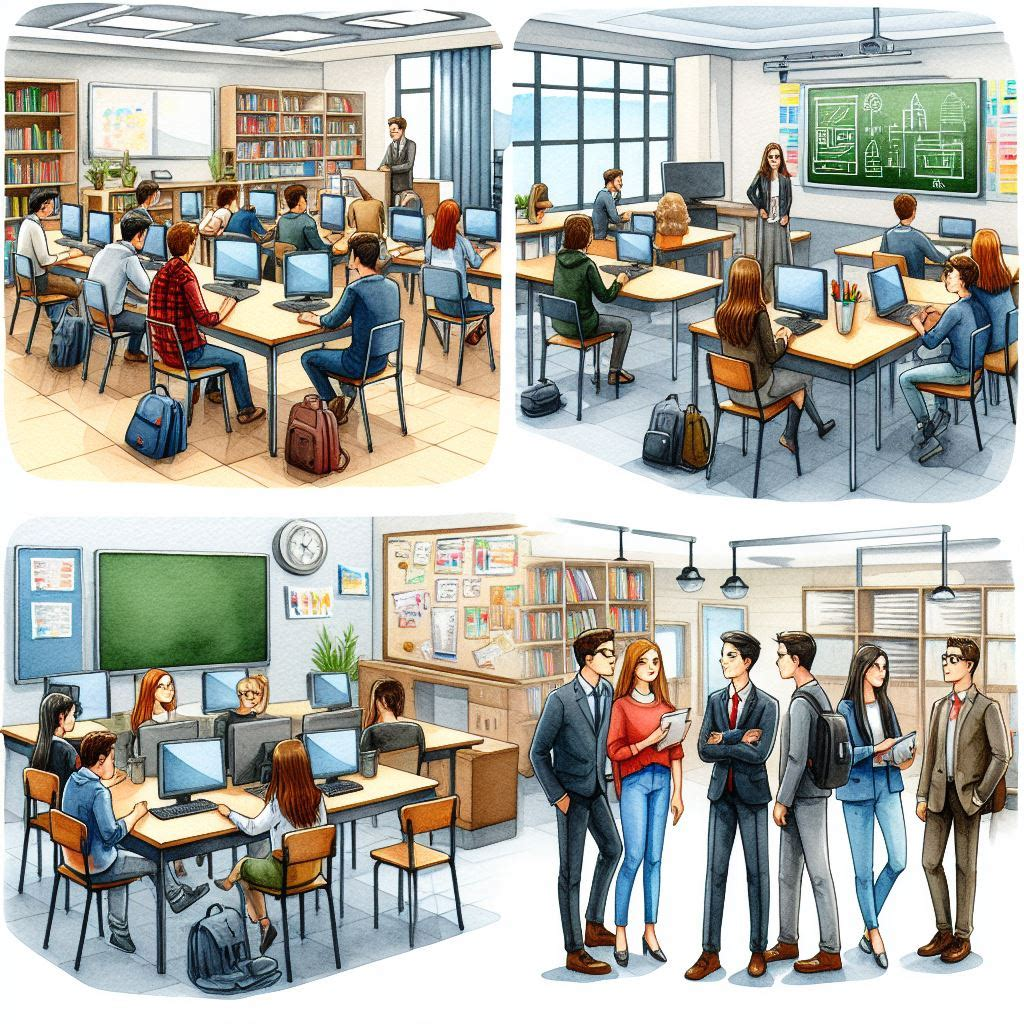
Specific Context of the Teaching/Learning Situation: On average, I have eight 45-minute class periods, each with 20-27 students. The classes meet daily, and for next school year, I would like to incorporate more flipped learning aspects. At our district, we are a 1:1 Chromebook-to-student school, with each student having a Microsoft and Google account.
General Context of the Learning Situation: The district has an academic team that gives each core subject unit exams that align with the units in Teks Resource System. Educators use the year-at-a-glance (YAG) and pacing guide to know when students should be learning specific standards. However, it is up to the educator to create the activities and expectations that align with the standards. English II in particular is given extra expectations as it is a STAAR-tested subject.


Nature of the Subject: When going to workshops, we always hear, “English is different.” Due to this, English is a combination subject in which we teach theoretical concepts, such as inferencing, and have students put them to practical use. Our questions can be convergent if it is a grammar question or divergent if we are discussing a book. We are a broad subject, perfect for constructivist learning theories; however, not so much for standardized testing due to vague concepts. Current controversies include the ongoing bans on books and topics that can be discussed, and the newest one is the AI grading system for the STAAR test.
Characteristics of the Learner: In my classroom, we have a high volume of emergent bilingual students. A majority of the students in my classroom have a Hispanic background. So, if the story we are reading has a historical context, we spend a week building students’ prior knowledge through discussions and history lessons. The learning goal for each of the students in my class is to become a better writer and speaker for informal and formal writing. Due to the change in how students communicate, they often leave out information, causing them to give incomplete answers at the beginning of the year.


Characteristics of the Teacher: When it comes to my subject, one of my strengths comes from being the department head. Knowing what is expected of students in the English I and III classes helps me prepare goals for the English II class. I am also familiar with their 10th-grade history class in addition to the English II class to deliver both horizontal instruction as well as vertical instruction.
Breaking down the different pieces of the puzzle to see how they fit in the context of the bigger picture helps the educator see any possible holes in the planning process. Before Fink’s worksheet, I did not stop to think about which parts of my class were convergent or divergent. The same goes for theoretical and practical; stepping back and seeing the puzzle pieces before me, I can see why students struggle with certain concepts in my class. The theoretical aspects of English II that are tested are the parts of the STAAR test that students usually score the lowest on when it comes to the test. It’s like seeing something that has always been there but was covered by a more significant problem. A copy of the blank form is found below for anyone needing to break down their classroom environment.
Breaking Down BHAG to Achieve CSLE
Image created by Samara Marin using Copilot 2024
We get so caught up in the whirl-wind that is teaching, we use the the questionnaire before to breakdown learning environment. Fink’s questionnaire below is used to break down our educational BHAGs.
“A year (or more) after this course is over, I want and hope that students will be able to work independently or collaboratively to create an MLA style research paper using credible sources that focuses on the students’ career goals as outlined in the English III Teks.”
My Big Harry Audacious Goal (BHAG) for the course is: Students are to connect formal and informal learning by the sixth six weeks in order to compose their research paper. In the sixth Unit of the course, students are to connect personal interests with a WWII research project to produce a WWII research paper and PowerPoint teaching presentation.
Foundational Knowledge
- What key information (e.g., facts, terms, formulae, concepts, principles, relationships, etc.) is/are important for students to understand and remember in the future? Students must remember MLA formatting, thesis statements, the research process, logical fallacies, credible sources, and rhetorical devices.
- What key ideas (or perspectives) are important for students to understand in this course? Students will need to understand research skills, critical reading/thinking skills, the writing process, how to avoid plagiarism, effective communication, textual evidence, literary analysis, and how to be adaptive/creative while viewing diverse perspectives.
Application Goals
- What kinds of thinking are important for students to learn?
- Critical thinking, in which students analyze and evaluate sources in order to determine source credibility.
- Creative thinking, in which students imagine and create their format and thesis statement to grab the attention of their imaginary audience when synthesizing their information from their sources.
- Practical thinking involves solving problems and making decisions when research reaches a dead end and students must decide on a different course of action.
- What important skills do students need to gain? Students will need to learn to communicate with their group in order to collaborate on their project and create a cohesive research paper. They will also need to learn to differentiate between credible and non-credible sources.
- Do students need to learn how to manage complex projects? Students will need to learn how to delegate tasks to group members as well as time management skills due to the various moving parts of the project. The students must pretend that they are working on a research team in a university or company compiling information for their paper to create one research paper and presentation to present their findings.
Integration Goals
- What connections (similarities and interactions) should students recognize and make…:
- Among ideas within this course? Within this course, students will be learning to collaborate since unit one. As the units progress the complexity of the projects increases in order to improve the demands of collaboration. In unit three of the course, students learn to analyze rhetorical appeals and how to spot logical fallacies when reading sources. In unit four, students learn how to produce short essays that avoid logical fallacies and include rhetorical appeals. In unit five, students learn how to compare sources multiple sources including video sources.
- Among the information, ideas, and perspectives in this course and those in other courses or areas? The research paper is paired with a WWII historical fiction book. Other activities in the unit are paired with the research paper and the book to collaborate with the 10th-grade world history course and provide a cross-curricular experience for students.
- Among material in this course and the students’ own personal, social, and/or work life? I use the principles of COVA to allow students ownership of their research papers with boundaries to ensure the best outcome from the students’ work. The assignment calls for students to choose a topic that is WWII-related. Many of the students succeed in linking the topic to their interests. Examples of this are:
- 1. A group who enjoys cars chose car companies that manufactured military vehicles for WWII.
- 2. A group who enjoys fashion chose: how did WWII affect the fashion industry?
- 3. A group who enjoys animal facts chose Wojtek the War Bear.
Human Dimensions Goals
- What could or should students learn about themselves? With this assignment, students often learn that their informal learning is learning. Many of them learn that they enjoy gathering facts, and that is also a form of learning; however, many of them don’t actually know how to use the internet to its full potential. So, many of them learn how to search correctly using better search techniques.
- What could or should students learn about understanding others and/or interacting with them? Students should learn how to collaborate. Due to having to color-code their research paper to show who did which part of the assignment, students are not able to hide in their groups. Those who are used to taking over have to let go of some control, and those who are used to having everything done for them have to do their share of the work for the weekly check-ins.
Caring Goals
- What changes/values do you hope students will adopt? I hope students will adopt appropriate research techniques, as well as see the value of collaboration.
- Feelings? I hope to encourage the drive to seek knowledge. Many students feel as though they can only learn if a teacher is teaching them, and if a teacher is teaching them, they don’t want to learn. However, many of these students are often the ones who are able to connect their interest more easily to the research topic and will argue to be allowed to research said topic.
- Interests? I hope to show students that their interests can be linked to their learning. As with all of my projects, I try to link some student choice or ownership with the project to create some interest. With this one, there is the added challenge of how to link your current interests to a war that happened in the 1940s. If students can see themselves in their learning, then maybe they will be more inclined to learn.
- Values? I hope to encourage students to value input from everyone in the classroom, not just their friends or the teacher. Depending on their topic, sometimes a classmate may know more than the teacher. This school year (2024-2025) is the sixth year I conduct this research project and I am still having students find new topics that have yet to be researched.
“Learning-How-to-Learn” Goals
- What would you like for students to learn about:
- how to be good students in a course like this? How to contribute to a discussion, collaborate, and ask questions. Many students are afraid to ask questions.
- how to learn about this particular subject? This subject in particular is about knowing your audience or the intended audience. It requires students to analyze, think critically, and use academic language to answer questions.
- how to become a self-directed learner of this subject, i.e., having a learning agenda of what they need/want to learn, and a plan for learning it? With this being the last unit in the course, students are creating their own research plan for their topic. I work more like a writing lab while groups work within themselves to complete all the necessary parts: research proposal, rough draft, final draft, and PowerPoint.
A blank copy of Fink’s questionnaire is below in case anyone would like to complete it to break down their BHAG.

Putting it all Together
Image created by Samara Marin using Copilot 2024
After putting everything together, we can create our three column chart: our puzzle box with the picture on it. This will be what we look back at everytime we need to create a lesson within the course/unit. In my case, it will be a six week unit to help incorporate the flipped learning innovation plan that I am working toward by the end of next school year (2024-2025).
BHAG (Big Hairy Audacious Goal) – Overarching Course Goal Students are to connect formal and informal learning by the sixth six weeks in order to compose their research paper. In the sixth Unit of the course, students are to connect personal interests with a WWII research project to produce a WWII research paper and PowerPoint teaching presentation.
Learners will use skills learned through out this course to create their end of the year WWII research paper/teaching project.
| Learning Goals | Learning Activities | Assessment Activities |
| Foundational Skills Students will be able to create an MLA document in order to provide a foundation for their research paper. | Students will create a proposal to verbalize what their topic is in MLA format. | Students will be assessed on how well their proposal is formatted. Students will receive feedback they can use for the rough draft of their research paper. |
| Application Goals Students will analyze multiple sources in order to synthesize their research paper. | Students will differentiate between credible and non-credible sources. Once students have a list of what makes a source credible the class will discuss it. | Students will be assessed informally through the discussion and formally through their works cited page. |
| Integration Goals Students will create cross-curricular connections with their world history’s WWII unit as well as personal connections to chosen interests. | Through their research proposals, students will have to describe what their topic is and why they chose it. The what connects to the WWII aspect and the why connects to their personal interests. | Students are assessed informally through communicating their ideas to the teacher to receive feedback on their ideas, and formally on their research proposals through Myaccess when they turn in their proposals. |
| Human Dimension Goals Students will create connections between their formal and informal learning through taking ownership of their project. | Students will search through sources online in order to compile a list of sources. Students’ sources will be evaluated during weekly check-ins. | Students will be assessed through weekly check-in posts to ensure students are working on their papers. |
| Caring Goals Students will collaborate in order to create a learning environment in which students learn from each other as much as from the teacher. | Students will create project goals, delegate tasks, and manage their own time in order to ensure project success using templates given to them by the teacher. Students may choose which template works best for them. | Students will share the collaborative Word document and PowerPoint with the teacher so the teacher can facilitate time management. Students will also share their plans on who is in charge of each part of the project so the teacher can work as a facilitator. |
| “Learning-How-to-Learn” Goals Students will integrate various search engines to their learning in order to synthesize the most credible sources. | Students will discuss on a weekly basis which search engines worked and how they adjusted their questioning techniques in the search engines. | Students will be evaluated informally on classroom discussions. |
Students are given one day a week in class to use as a research day due to the other aspects incorporated into the unit. Integrating the flipped classroom within my innovation plan will allow students more time to collaborate. This year (2023-2024), the students have five weeks to complete the project, which sounds like a significant amount of time until we consider that they are only in my class for 45 minutes. This only gives them 3 hours and 45 minutes to collaborate on the project in class. The flipped classroom will allow class time to be used on the project instead of lectures.

References
Image created by Samara Marin using Copilot 2024
Athuraliya, A. (2023, October 12). Divergent vs convergent thinking: What’s the difference? Creately. https://creately.com/guides/divergent-vs-convergent-thinking/
Fink, L. D. (2003). A Self-Directed Guide to Designing Courses for Significant Learning. San Fransisco.
Manaher, S. (2023, August 16). Practical vs theoretical: Which one is the correct one?. The Content Authority. https://thecontentauthority.com/blog/practical-vs-theoretical
TCMPC Teks Resource System. TEKS Resource System. (n.d.). https://www.teksresourcesystem.net/module/content/search/item/710198/viewdetail.ashx


 Marin's Eportfolio
Leave a reply to Influencing Change in Educational Environments: The Power of Social Support – Marin's Eportfolio Cancel reply