
Who Am I Trying to Change? And What Do I Want Them to Change?
Image created using Microsoft Copilot by Samara Marin 2024
“The secret of change is to focus all of your energy not on fighting the old, but on building the new!”
-Socrates
When trying to change our work environment, we often focus on the top of the leadership chain. We expend all of our energy explaining the need for our plan to be implemented to one or two people who are believed to be at the top. The main problem with that plan is, by the time we convince the higher-ups that our plan is the best and maybe even necessary, we are too exhausted to explain and even teach those around us about the plan that we have just spent weeks, months, or even years fighting for.


Sources four and five of The Influencer Model rely on the support of others, stating that many who don’t realize the need for social support fail. When attempting to change the educational system, the first aspect that I must analyze is whether others want this change. Because in order to create a flipped classroom using my innovation plan, I cannot start by fighting against the organization and its educators. Currently the organization’s model is one in which students must receive an hours’ worth of homework a day.
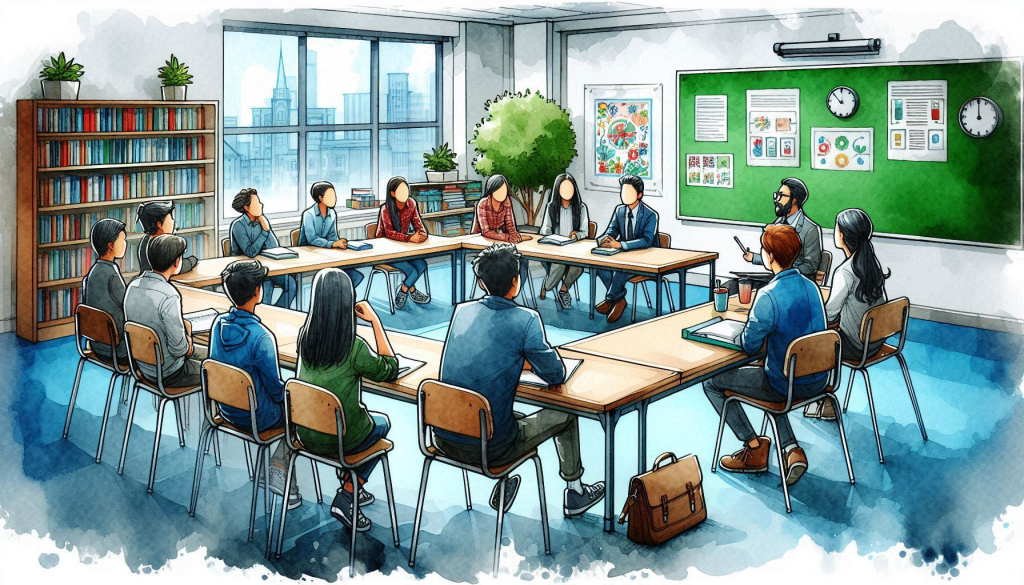
After discussing it with the other instructors, I have found that many of the STAAR-tested teachers would also like to move to a flipped classroom due to the new testing format. Having students complete their video lectures at home using Nearpod, Tedtalk, Kahn Academy, and other digital tools will assist teachers with teaching students real skills instead of teaching them to a test. What the STAAR-tested teachers, the English department, and I would like to achieve is creating a flipped classroom that allows for blended learning in and out of the classroom environment. This will help mitigate some of the cheating we see due to AI by teaching students how to use AI ethically within the classroom. If most of the assignments are completed with the teachers, there will be more chances for students to ask questions if they are struggling and fewer chances for students to cheat. We also want to create significant learning environments by integrating COVA into project-based learning that can be completed in the classroom since the bulk of the lecturing will be done at home through videos.
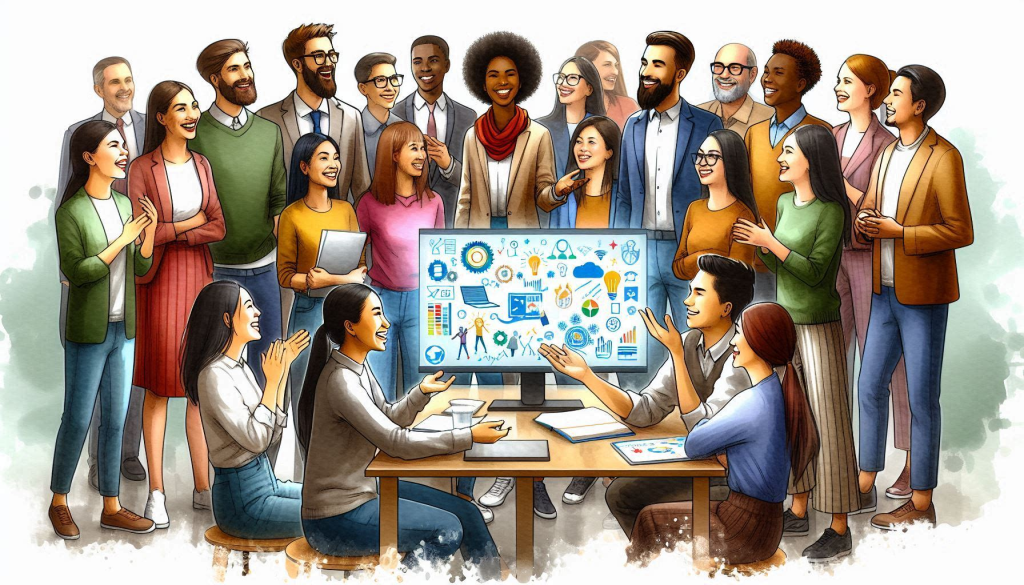
When we have completed flipping our classrooms in the English department and with the other STAAR-tested subjects in the school, we hope to see a noticeable difference in student moods. At least at the 9th and 10th grade levels. This is because, during the 2024-2025 school year, we will have students from 9th-12th grade in the Early College High School (ECHS) and Pathways in Technology Early College High School (PTECH) on campus. The 9th graders must take two STAAR tests, English I and Biology, and the 10th graders must take English II. This is on top of their other required state testing throughout the year.

My plan intends to create an environment where students feel empowered by their learning instead of stressed. When using the flipped classroom, students interact with the lesson in a way they find the most appropriate for themselves before the intended assignment designated for that lecture. If students want to create online study groups, rewatch the videos, or take notes, the choice is up to them. In a study conducted during the COVID-19 pandemic, when many K-12 and upper education institutions were forced to integrate technology and a blended approach, a study found that “The reduced amount of direct, virtual instruction required when students engage with content prior to a live class session also appears to have broader mental health benefits for students” (Smith, 2021). Reducing students’ negative emotions about a subject could create a better learning environment for the student. This will create a more well-rounded student academically and emotionally.
For my plan to succeed, the vital change that needs to happen is for those around me to embrace technology. While I don’t expect educators to accept technology in every classroom, there needs to be a way for students to access technology. We are a 1:1 campus for Chromebooks; however, students do not have a way to print materials. There needs to be a way to connect technology-based projects and paper-based projects. To create well-rounded students, the students must have access to various mediums. While technology-based projects should be accepted, this does not mean that traditional kinesthetic projects must become obsolete. Often, educators simply feel overwhelmed, underprepared, unsupported, and simply at a loss as to what blended learning is. “The lack of faculty training and support, language barriers, and poor promotion incentives for blended learning initiation are some of the challenges that teachers are experiencing in the use of blended learning” (Alvarez, 2020). In order to create cohesion between the two types of teaching, professional development on blended learning will be needed for educators on campus to understand what blended learning consists of.


The current organizational influencers are other instructors in the English department. When planning goals for the year, we plan as a department and have spoken about different programs that will make blended learning through a flipped classroom easier. How the English department establishes yearly, unit and weekly goals can be read in the blog post on aligning outcomes, assessments, and activities. During our weekly meeting, I check-in with my department about troubleshooting any programs I recommended for blended learning, and they give me feedback as the department head. I also discussed integrating technology with the STAAR-tested subjects, and we bounced ideas off each other. This is how I have come to research the Savvas online textbooks since the biology teacher recommended them. The science department will test the company first, then let the rest of us know if they are worth the investment. With this group of instructors, I have garnered feedback on integrating technology in the classroom, assessment process, and homework to create campus-wide professional development.

Six Pillars for Effecting Change.
Created with Adobe Firefly by Samara Marin 2024
The Six Sources of Change are divided into subgroups in the book Influencer: The New Science of Leading Change, and depending on how it is viewed, we can see what the person finds most important to focus on. So, to begin with, the six sources are divided into two columns: motivation and ability. Switch: How to Change Things When Change is Hard perfectly explains the chart’s motivation and ability aspects. When it comes to a person’s motivation to change, we have to motivate their emotional and logical reasoning. The authors, Heath and Heath, discuss the idea that we must consider a person’s mental exhaustion when making a change. If a person’s motivation to make the change is not strong enough, their mental exhaustion from having to actively choose to change in the beginning will cause them to revert to their original actions. Regarding the ability side of the column, the authors state, “The first surprise about change: What looks like a people problem is often a situation problem” (Heath & Heath, 2011). This can be applied to both the ability column and the personal and social rows of the chart. We often blame a person for not changing but do not place that person in a situation that makes it easier for them to change. Heath and Heath’s theories fit well into the six influences of change by Grenny, Patterson, Maxfield, Mcmillan, and Switzler.
This may be difficult to visualize, so there is a reference below:
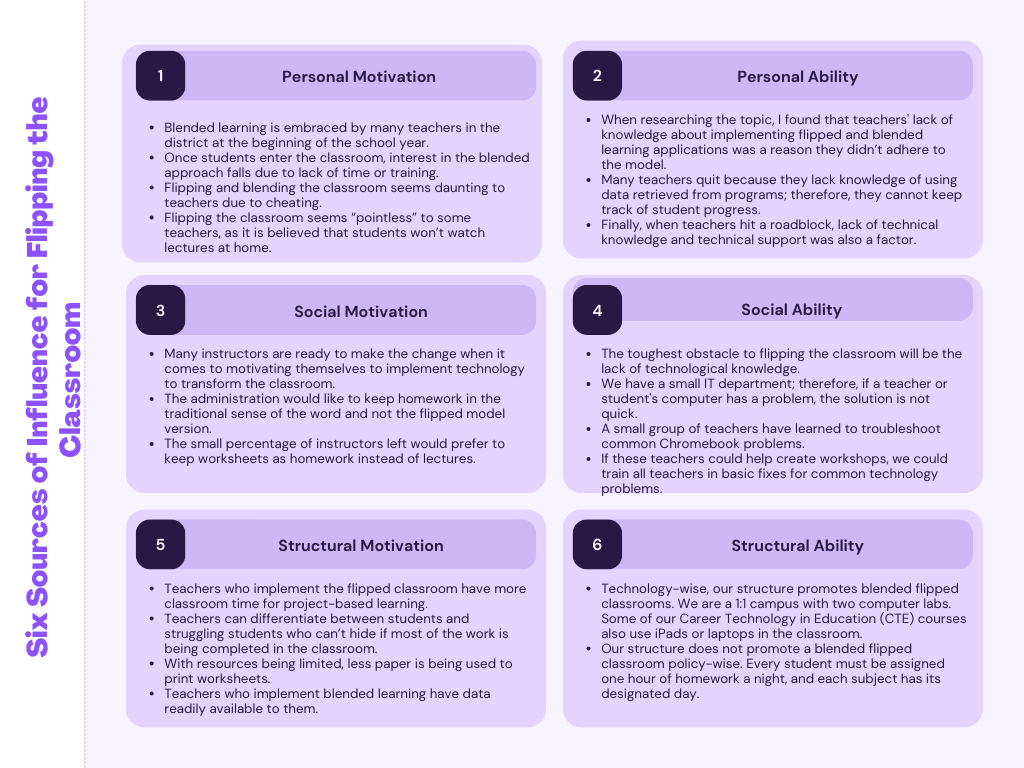
Created Using Canva By Samara Marin 2024
By having the six sources of influence laid out for me in an easy to see table, I can see which of the sources are ready to be utilized and which need to be worked on. For example, in the personal abilities section, many of the teachers either didn’t flip the classroom or gave up on the flipped classroom due to not having the skills to troubleshoot Chromebook problems. Now that I have the chart filled out, I can see that in the social abilities section there are a group of influencers that can help me create professional development for teachers who want to flip the classroom. I can pinpoint who my influencers are, and what is holding back anyone in the district who is not ready. I can also see what my biggest obstacle is going to be which is the district homework policy.
I can start by discussing with my organizational influencers what programs work best for them and our population of students. We can survey the current staff to see what technology based professional development programs they would like and propose them to district administrators. Finally, my innovation plan discusses the generally benefits of a flipped and blended learning environment; however, I can take it a step further and survey the students and teachers to see what their current feelings are toward the homework policy is.

References
Created using Microsoft Copilot by Samara Marin 2024
5 Challenges of Blended Learning Solved With Benq Interactive Display. (n.d.). https://www.benq.com/en-us/business/resource/trends/5-challenges-of-blended-learning.html
Alvarez, A. V. (2020). Learning From the Problems and Challenges in Blended Learning: Basis for Faculty Development and Program Enhancement. Asian Journal of Distance Education, 15(2). https://doi.org/https://doi.org/10.5281/zenodo.4292631
Benefits of a Flipped Classroom for Teachers and Students. You are Mom. (2022, December 27). https://youaremom.com/parenting/raising-a-child/flipped-classroom/
Grenny, J., Patterson, K., Maxfield, D., McMillan, R., & Switzler, A. (2014). Influencer: The New Science of Leading Change. McGraw Hill-Ascent Audio.
Heath, C., & Heath, D. (2011). Switch: How to Change Things When Change is Hard. Thorndike Press.
Nouri, J. (2016). The Flipped Classroom: For Active, Effective and Increased Learning – Especially For Low Achievers. International Journal of Educational Technology in Higher Education, 13(1). https://doi.org/10.1186/s41239-016-0032-z
Shand, K., & Glassett Farrelly, S. (2018). The Art of Blending: Benefits and Challenges of a Blended Course for Pre-service Teachers. Journal of Educators Online, 15(1). https://doi.org/10.9743/jeo2018.15.1.10
Smith, R. (2021). Flipped Learning During a Global Pandemic: Empowering Students with Choice. International Journal of Multidisciplinary Perspectives in Higher Education, 5(1), 100–105. https://doi.org/10.32674/jimphe.v5i1.2428


Leave a Reply