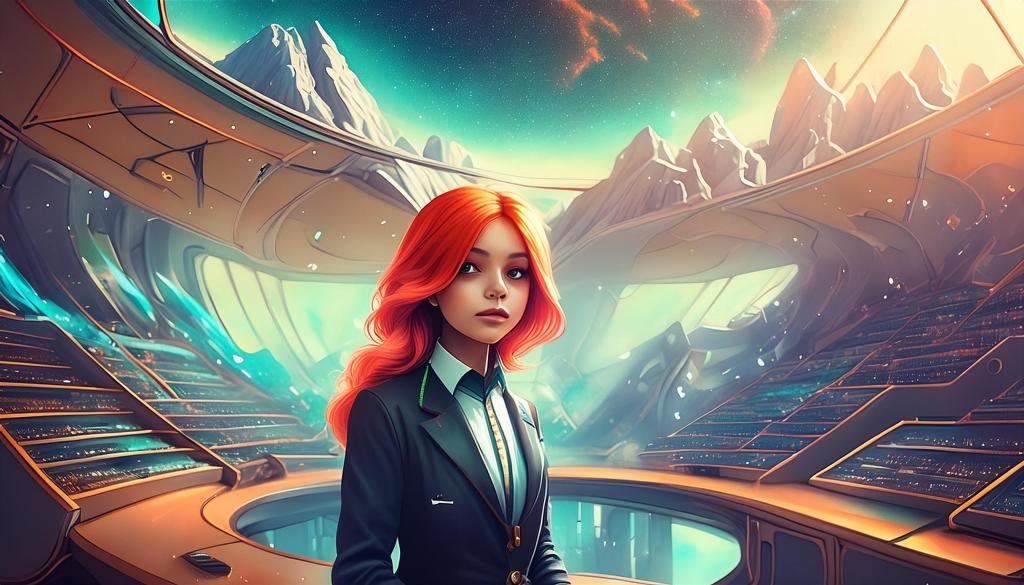
The Battle of Problems and Solutions
Image created by Samara Marin Using Adobe Firefly 2024
As the education sphere continues to evolve, problems and solutions appear in a pattern. Every time we solve a problem, three more pop up. It feels like we were barely recovering from COVID-19 and remote learning when students returned to classes. COVID-19 propelled the classroom into the technological era for many districts that had yet to embrace technology due to necessity. Blended learning and the flipped classroom were getting the spotlight; however, when the students returned to the classroom, they were followed by a new problem for educators.
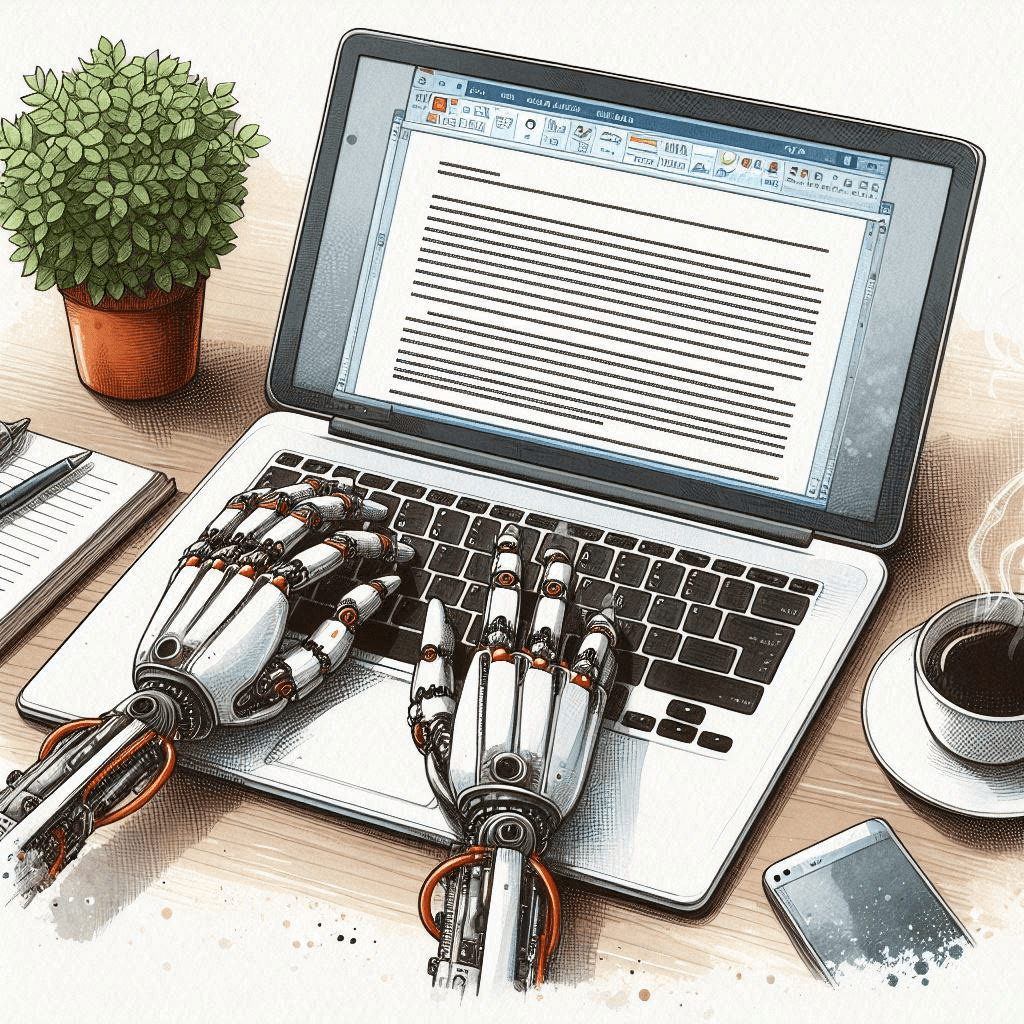
Educators were thrown into a new educational system during the pandemic, resulting in many feeling unprepared. Then, students returned to school with a tool that some embraced and some used as a reason to return to a system with less technology. ChatGPT was released in November of 2022 and returned to many classrooms with students. Due to the fear that ChatGPT would promote nothing but cheating, many schools wanted paper/pencil assignments to ensure students completed them. However, many state tests were progressing to be technology-based. Take the STAAR test, for example, which was 100% online the same year ChatGPT was released (2022-2023 school year). The fear of AI was causing a contradiction in many educational systems.
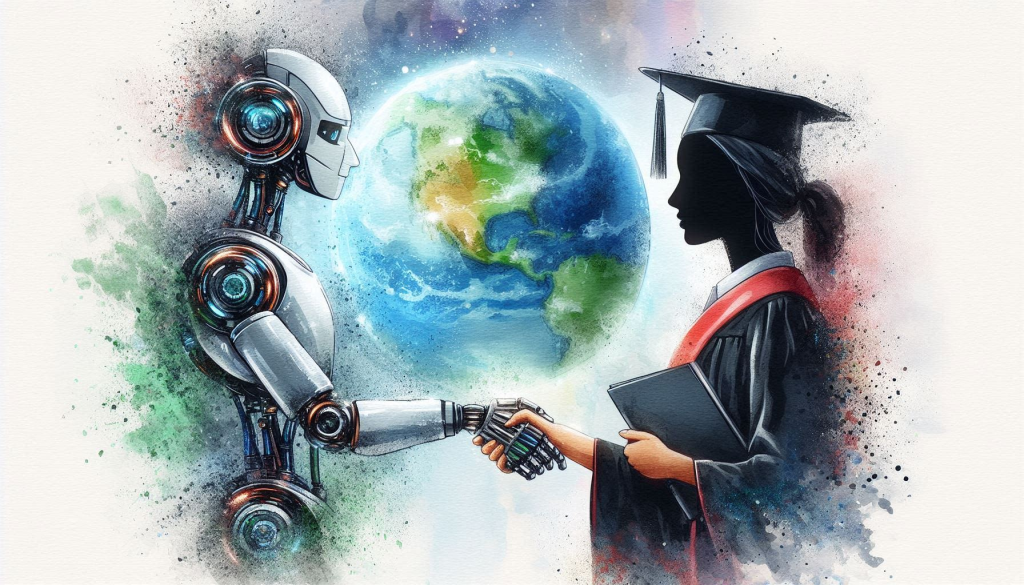
Is There a Solution?
Image created by Samara Marin Using Microsoft Copilot 2024
After researching the topic of the flipped classroom for my innovation plan, I have realized that not only can AI be brought into the classroom, but it can also be beneficial to educators. Many educators suffer from burnout due to long hours spent planning or worrying about whether the assignment is resistant to cheating. If AI is here to stay, why not utilize it? Students will have to learn how to use AI to keep up with many future job markets as courses are now offered in the subject as certifications. The flipped classroom offers a solution by allowing the educator to monitor students as they work on what would typically be homework while students complete lectures at home. By preparing for the assignment at home, instead of completing said assignment, students don’t have many opportunities to use AI to cheat. Instead, educators can use the added classroom time to show students ethical ways to utilize AI.
I interviewed two of my classmates to explore their perspectives on the topic of AI avoidance by educators and how schools can help implement the use of AI among educators. Both current educators work in various educational settings and teach different grade levels. Together, we represent various educational experiences in public, charter, and private schools, from elementary to high school. Maria teaches Spanish to 1st through 8th graders at a private school, Amburh instructs all subjects to her 2nd-grade class in a public school, and I teach English at a charter high school. Below is a 5-minute preview of that interview.
After viewing this short preview, you can read my full article and watch the full 20-minute video, in which we continue to discuss AI and go more in-depth into what Magicschool.AI has to offer. You can find it in my full article below.

Using AI Tools for Blended Learning: Educator Dilemmas and Solutions
Image created by Samara Marin Using Adobe Firefly 2024 ai’s Evolution Many find it hard to believe that artificial intelligence (AI) existed before the 21st century. The first historical example of Generative AI (GAI) was an early version of a chatbot today, created in the 1960s by Joseph Weizenbaum. Once a computer program is created,…


References
Adam Zewe | MIT News. (n.d.). Explained: Generative AI. MIT News | Massachusetts
Institute of Technology. https://news.mit.edu/2023/explained-generative-ai-1109
AI in education: How Artificial Intelligence is Impacting the Classroom. Computeam.
Artificial Intelligence. Lamar.edu. (n.d.).
Demir, B. (2023, August 17). How can AI tools be utilized to increase Classroom
Engagement? Twin Science. https://www.twinscience.com/en/teacher-tips/how-to-utilise-ai-tools-to-increase-classroom-engagement/
DeVille, K. (2024, May 10). How to Use AI for Teachers: Enhancing Classroom Learning.
STEM Education Guide. https://stemeducationguide.com/ai-for-teachers/
Embracing Artificial Intelligence in the Classroom. Harvard Graduate School of
Education.(n.d.).https://www.gse.harvard.edu/ideas/usable-knowledge/23/07/embracing-artificial-intelligence-classroom
Ethical AI for teaching and learning: Center for teaching innovation. Ethical AI for
Teaching and Learning | Center for Teaching Innovation. (n.d.).
https://teaching.cornell.edu/generative-artificial-intelligence/ethical-ai-teaching-a
d-learning
Free, AI-powered Teacher Assistant by Khan Academy. Khanmigo. (n.d.).
https://www.khanmigo.ai/teachers
Foote, K. D. (2024, March 5). A Brief History of Generative AI. DATAVERSITY.
Forbes Magazine. (2024, March 6). Artificial Intelligence in Education: Teachers’ Opinions
on AI in the Classroom. Forbes.
https://www.forbes.com/advisor/education/it-and-tech/artificial-intelligence-in-school/
Getting Started with Ai-Enhanced Teaching: A Practical Guide for Instructors. MIT Sloan
Teaching & Learning Technologies. (2024, May 6).
https://mitsloanedtech.mit.edu/ai/teach/getting-started/
Grammarly for Education. Grammarly. (n.d.). https://www.grammarly.com/edu
Kim, N. J., & Kim, M. K. (2022, February 22). Teacher’s Perceptions of Using an Artificial
Intelligence-Based Educational Tool for Scientific Writing. Frontiers.
https://www.frontiersin.org/journals/education/articles/10.3389/feduc.2022.755914/full
Parker, Dr. J. (2024, January 29). Educator Edtech Review: Magic school ai.
TechLearningMagazine.
https://www.techlearning.com/news/educator-edtech-review-magic-school-ai
Professional Writing Starts in the Classroom: Building Career Readiness Through
Communication. Grammarly. (2022, September 13).
https://www.grammarly.com/blog/building-career-readiness/
Sammour, G. (2023, October 19). A Practical Agenda for Using AI in the Classroom.
AACSB.
https://www.aacsb.edu/insights/articles/2023/05/a-practical-agenda-for-using-ai-in
the-classroom
Team, M. E. (2024, June 3). Meet your AI Assistant for Education: Microsoft Copilot.
Microsoft Education Blog.
https://www.microsoft.com/en-us/education/blog/2024/01/meet-your-ai-assistant-f
r-education-microsoft-copilot/
Walter, Y. (2024, February 26). Embracing the Future of Artificial Intelligence in the
Classroom: The Relevance of AI Literacy, Prompt Engineering, and Critical
Thinking in Modern Education – International Journal of Educational Technology in Higher Education. SpringerOpen. https://educationaltechnologyjournal.springeropen.com/articles/10.1186/s41239-024-00448-3
YouTube. (2023, May 1). How AI Could Save (Not Destroy) Education | Sal Khan | Ted.
YouTube. https://www.youtube.com/watch?v=hJP5GqnTrNo&t=481s


 Marin's Eportfolio
Leave a reply to Transforming Classrooms: Embracing Innovative Technology – Marin's Eportfolio Cancel reply